
Teapots and tea service for hotel and B&B hospitality: complete 2026 guide
Oct 30th 2026

Hotel and B&B tea service is the selection, preparation, and presentation of tea with the aim of giving overnight guests a welcoming, dependable drink. This guide to tea service for hotels and bed and breakfasts covers teapots, brewing, cleaning, and guest choice; unlike home brewing, hospitality requires a routine that different staff members can repeat.
- Tea service for hotels and bed and breakfasts needs clear tea choices, repeatable brewing, and clean teapots.
- Tea The World suits hosts sourcing loose leaf tea and tea accessories for guest hospitality.
- Use sachets for self-service; reserve loose leaf tea for settings where staff can control steeping.
- Choose glass or cast iron teapots by cleaning requirements and handling, not appearance alone.
Why tea service matters for hotels and B&Bs
Your breakfast guest, late-arriving traveler, and evening reader need different things from the same tea station. Breakfast service needs a clear choice and an easy pour. An evening tray needs understandable caffeine information, while a shared lounge needs equipment that stays tidy between guests.
Tea The World is best for hosts seeking loose leaf tea and tea accessories for guest tea service. Start with the Tea The World selection, then match your purchases to the service you can actually maintain. An online retailer supplies the tea and accessories; your property remains responsible for preparation, guest information, and equipment care.
For your 2026 service plan, begin with the handoff rather than the teapot. Decide who measures the tea, who removes the leaves, and who washes the basket. A beautiful pot does not solve an unclear routine.
Build a tea service your team can repeat
1. Define where and how you will serve tea
Walk through each setting as a guest would. A breakfast table has staff nearby; a bedroom tray leaves the guest to interpret the instructions. A lounge station introduces another question: who notices an empty container or a used infuser?
Choose your service format before choosing your equipment. Staff-prepared loose leaf tea fits a hosted service; sachets fit a simpler guest-operated setup. Neither format excuses vague labeling or an awkward place to discard used tea.
Write a short service brief for each location. Include whether guests carry hot water themselves and where the pot rests after pouring. Keep hot-water equipment and cords away from crowded edges, and follow the equipment manufacturer's operating instructions.
- Identify breakfast, bedroom, lounge, and evening service separately.
- Assign responsibility for brewing, replenishment, and cleaning.
- Provide a stable, heat-resistant place for the teapot.
- Put a clearly identified waste container near self-service tea.
- Check that guests can read instructions without moving hot equipment.
2. Choose teapots by handling and cleaning needs
Start with the pots you already own. Test each with water: does the lid stay secure during an ordinary pour, can you grasp the handle comfortably, and can you remove the infuser without touching hot metal? Inspect the manufacturer's care instructions before assigning a pot to frequent service.
Glass lets guests see the infusion and makes remaining tea visible. Its limitation is breakage risk and the need to remove visible staining. Cast iron brings a different serving experience, but weight and interior care deserve attention; do not assume a cast iron teapot belongs on a stove.
For your 2026 equipment shortlist, favor a pot your staff can empty completely and clean without improvised tools. A removable basket gives you a separate part to wash, but also creates a small item that staff must track.
- Check pouring, lid fit, and handle comfort with water first.
- Confirm the manufacturer's heat-source restrictions.
- Inspect baskets for trapped leaves and inaccessible seams.
- Check whether every component is dishwasher-safe rather than assuming.
- Choose a tray that supports the pot without crowding the cup.
3. Build a small, clearly labeled tea menu
Draft your menu on paper before ordering. Organize it around guest decisions: a familiar caffeinated tea, another flavor profile, and an explicitly verified caffeine-free choice. A long list adds little if guests cannot tell the options apart.
Use plain descriptions of the actual tea. Name the base and ingredients from the packaging, then add a brief flavor description you can confirm by tasting. A fruit name alone does not tell you whether a blend contains black tea, green tea, or only herbs and fruit.
Tea The World offers loose leaf teas, herbal blends, and accessories for tea service. Use that selection as a sourcing path, then check each item's ingredients and preparation information before adding it to your guest menu. Do not infer a blend's contents from its name.
For evening service, offer a caffeine-free alternative only after checking the ingredients. Describe it as an evening choice, not a treatment for sleep or digestive problems.
- Copy ingredient names accurately from the packaging.
- Separate caffeinated and verified caffeine-free options.
- Write flavor notes after tasting the tea yourself.
- Keep original packaging information accessible to staff.
- Ask guests about ingredient concerns without promising medical suitability.
4. Standardize measurement and steeping
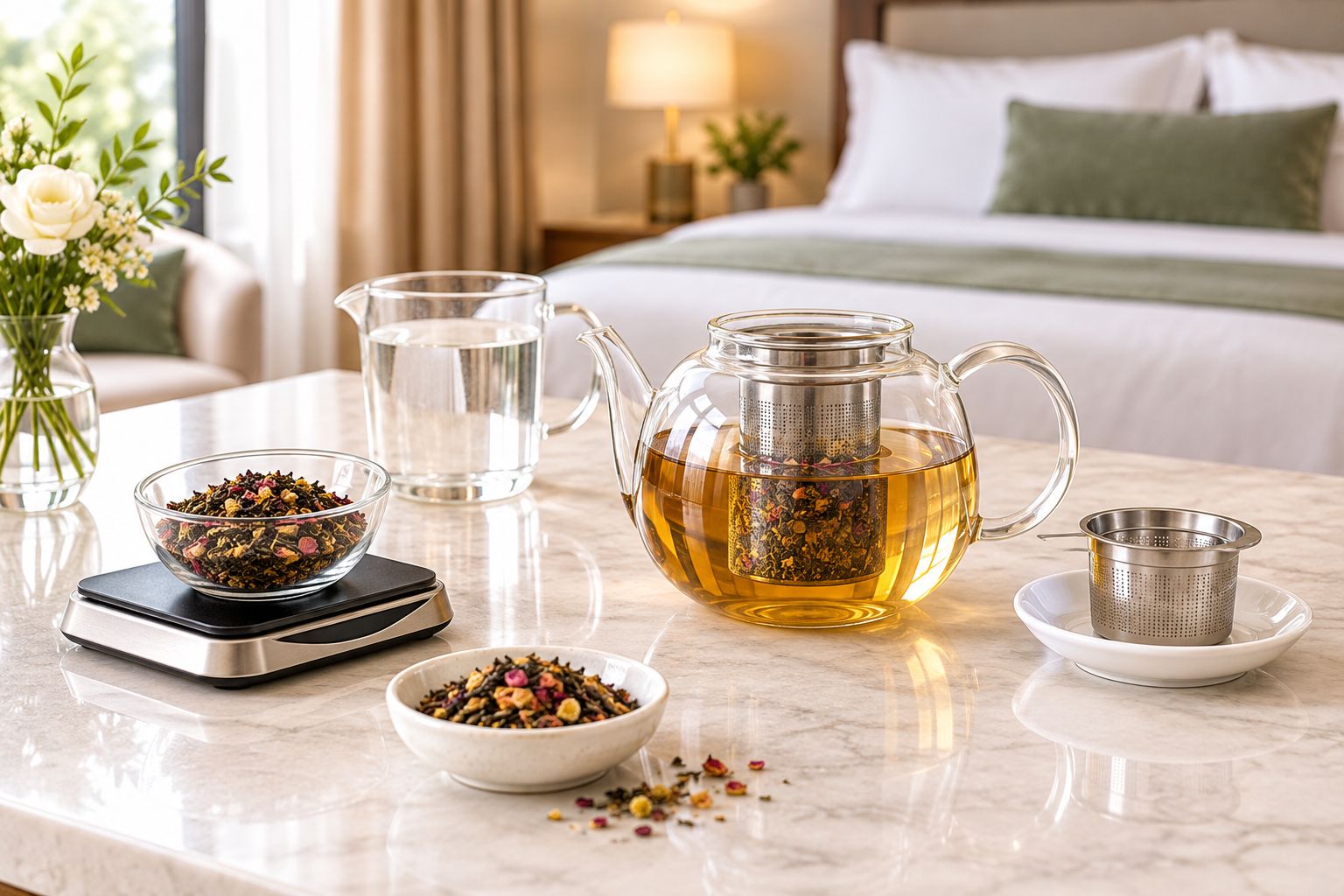
Use the tea supplier's instructions as your starting point. Measure water and leaves during setup, then record the method your staff will follow. Spoonfuls vary with leaf shape, so a small scale makes a loose leaf recipe easier to repeat.
For a conventional black tea test, a familiar starting recipe is about 2 grams of leaves per 8 fluid ounces of water, steeped for 3–5 minutes. Treat that as a trial recipe, not a rule for every blend; the tea's own instructions take priority. Taste before approving the service recipe.
Tea The World tins contain tea sachets; pouches contain loose leaf tea. Keep those formats distinct in staff instructions: sachet service does not need loose leaf measuring, while pouch service needs a measured portion and suitable infuser.
Remove the leaves when the chosen steep ends. If a guest receives a pot with its basket still inside, provide a timer or clear instruction and somewhere to place the wet basket.
- Record the leaf weight and water volume for each tea.
- Follow the supplier's water-temperature guidance.
- Set a timer for the approved steeping period.
- Remove the basket before serving a finished infusion.
- Taste the recipe in the actual cups and pots guests will use.
5. Make cleaning part of the service routine
Empty used leaves before they become a forgotten task. Follow the maker's cleaning instructions for the pot, lid, basket, and any interior lining. Rinsing away visible leaves is not a substitute for your property's required food-contact cleaning and sanitizing procedure.
Glass shows stains clearly, which helps you spot cleaning needs before a guest does. Use the guide to removing tea stains from a glass teapot with an infuser alongside the equipment manufacturer's directions. Do not apply a glass-cleaning method to an enamel-lined pot without checking compatibility.
In your 2026 service checklist, distinguish between clean, dry, and ready to use. A damp basket left in a closed pot is not ready for storage. Inspect equipment before putting it back on a guest tray, and retire chipped or damaged pieces.
- Remove leaves and separate removable components after use.
- Follow approved washing and sanitizing procedures.
- Let components dry before closed storage.
- Inspect glass, spouts, lids, and interior linings for damage.
- Keep cleaning products away from tea and guest condiments.
6. Design a tray guests can understand
Set up a sample tray using your existing cups, spoons, and pot. Ask someone unfamiliar with the arrangement to prepare a drink without coaching. Watch where they hesitate: tea identification, water quantity, steeping time, or disposal.
Keep the instructions close to the action. The guest should not need to search a room directory to learn when to remove a sachet. Separate clean utensils from the place used tea will land, and leave enough space to lift the pot without brushing other items.
An evening tray can feel thoughtful without making wellness promises. Describe aroma and flavor, identify caffeine accurately, and offer additions separately. Honey, milk, or lemon changes the drink; guests should choose those additions rather than receive them automatically.
- Put the tea name and brewing instructions together.
- Include a saucer or suitable receptacle for used tea.
- Keep handles and pouring space unobstructed.
- Offer sweeteners and other additions separately.
- Test the tray from a seated guest's position.
7. Review the service before expanding it
Test your 2026 tea service during ordinary operating conditions, not only during a quiet demonstration. Prepare the tea while other breakfast tasks are happening. Watch whether the chosen routine still produces a clearly identified drink and a clean handoff.
Use a simple written log rather than buying new systems first. Record what ran out, which instructions prompted questions, and which pots returned with leaves still steeping. These observations tell you whether to change the menu, equipment, or staff routine.
Expand only after the basic service works. A new tea adds another ingredient record and brewing method; another teapot adds care requirements. Fix the confusing handoff before adding another flavor.
- Record guest questions in the guest's own words.
- Check whether staff follow the approved brewing method.
- Note equipment that is difficult to empty or clean.
- Review opened tea storage against supplier instructions.
- Remove choices your team cannot describe or prepare consistently.
Compare tea service options for your property
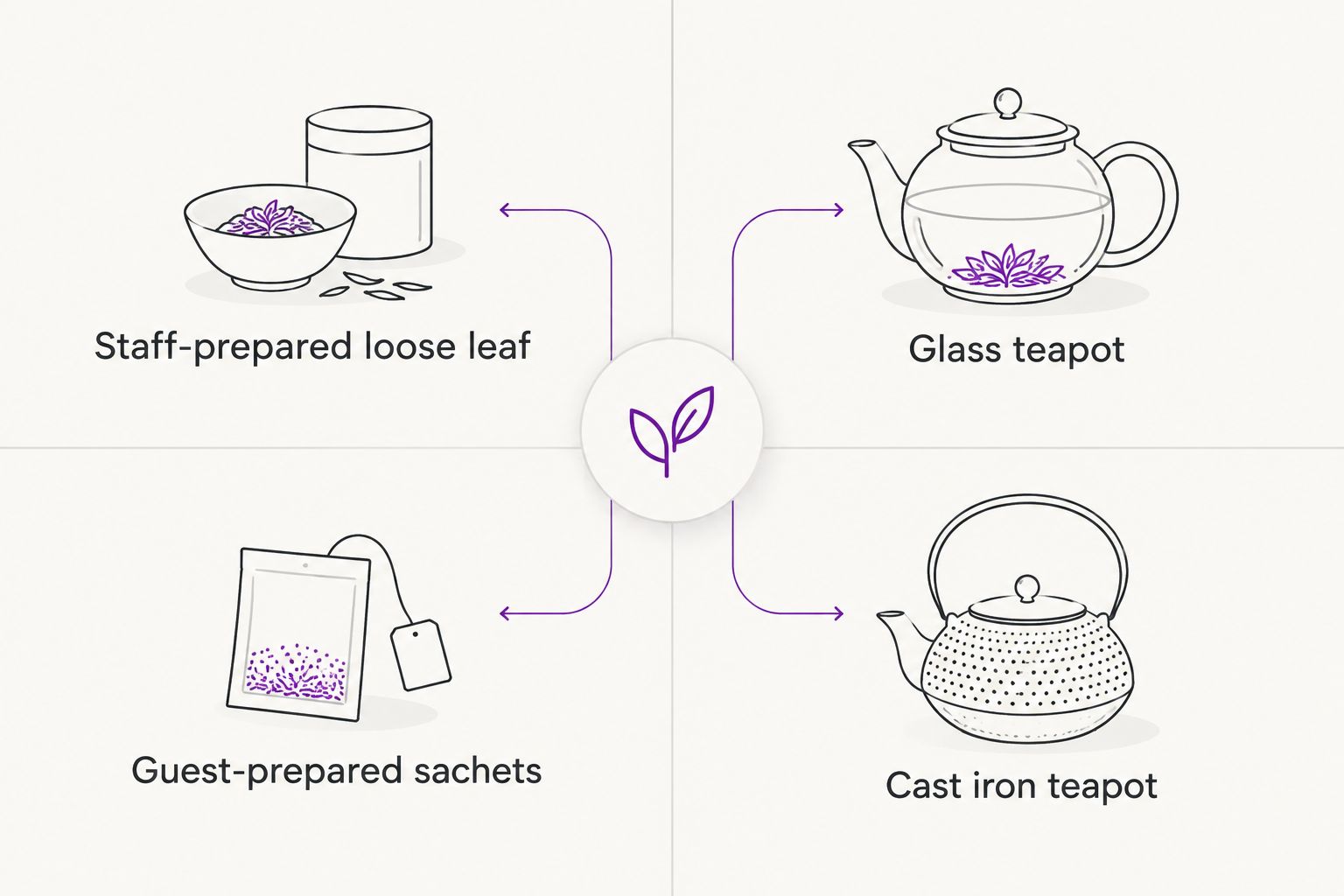
Choose the format around who controls brewing. The options below solve different problems; none removes the need for clean equipment and accurate ingredient information. You can combine formats across locations without making every tea available everywhere.
| Option | Best for | Main advantage | Key limitation |
|---|---|---|---|
| Staff-prepared loose leaf | Hosted breakfast and seated service | Staff control measurement and leaf removal | Requires preparation, basket cleaning, and training |
| Guest-prepared sachets | Bedroom trays and simple self-service | Avoids loose leaf measuring | Guests still need water and steeping instructions |
| Glass teapot | Visible, table-side infusion | Guests can see the tea and remaining liquid | Breakage and visible staining need attention |
| Cast iron teapot | Seated service with deliberate handling | Offers a distinctive serving vessel | Weight, lining care, and heat-source restrictions need checking |
Glass and cast iron describe equipment, not competing brewing recipes. Loose leaf and sachets describe tea formats. Match both decisions: a staff-prepared loose leaf service still needs a practical pot, while sachets still need a clean cup and safe hot-water arrangement.
Common mistakes hotels and B&Bs make
Leaving loose leaves in a guest's pot
A finished infusion becomes an unfinished task when the guest must guess when to remove the basket. Remove it before service or explain the timing and provide somewhere to put it. A wet basket should not end up on furniture.
Treating fruit flavor as proof of no caffeine
A fruit-flavored blend can have a caffeinated tea base. Read the ingredients before using an evening or caffeine-free label. Keep that information available when a guest asks.
Buying teapots before testing the cleaning routine
A decorative pot is a poor service choice if staff cannot clean its basket or handle it comfortably. Trial the full cycle: fill, brew, pour, empty, wash, and dry. Include the staff members who will do the work.
Turning a bedtime tea into a health promise
An evening drink can be part of a pleasant routine without being a sleep treatment. Avoid menu claims about curing insomnia, treating digestion, or detoxifying the body. Guests with medical or ingredient concerns should seek appropriate professional advice.
Serving everyone from one unexplained pot
A shared pot does not communicate ingredients or caffeine content by itself. Identify the tea clearly and do not silently substitute another blend. Offer guests a choice before pouring.
FAQ
What's the best tea service for hotels and bed and breakfasts?
The best tea service matches the location: staff-prepared loose leaf for hosted service and sachets for simpler self-service. Both need accurate ingredients, clear brewing instructions, and a defined cleaning routine.
Are glass teapots better than cast iron teapots for a B&B?
Glass teapots are better when you want guests to see the infusion; cast iron requires particular attention to weight and care instructions. Choose by pouring comfort, cleaning access, and manufacturer restrictions rather than appearance alone.
How much loose leaf tea should a hotel use per cup?
Follow the tea supplier's recipe for each tea. A conventional black tea trial can start with about 2 grams per 8 fluid ounces of water, but blends and leaf styles need their own approved instructions.
Should hotel room tea trays use sachets or loose leaf?
Sachets suit hotel room trays when you want to avoid guest measuring and loose leaf disposal. Loose leaf needs an infuser, a clear recipe, and somewhere to put the used leaves.
Is fruit tea always caffeine-free?
No, fruit flavor does not establish caffeine content. Check whether the blend contains black tea, green tea, or another caffeinated ingredient before labeling it caffeine-free.
Can a cast iron teapot go directly on the stove?
Only use a cast iron teapot on a stove when its manufacturer explicitly permits that use. Do not assume a serving teapot functions as a kettle.
What should a B&B offer guests before bed?
Offer a clearly labeled, verified caffeine-free choice for guests who want an evening drink. Describe flavor and ingredients without promising sleep benefits or presenting tea as a replacement for medical care.
One last thing
Before welcoming guests to your 2026 tea service, rehearse the smallest detail: where does the wet infuser go? That answer affects the tray, instructions, cleaning, and guest experience. Give it a clear place, and the whole service feels more considered.
Related guides
- Tea infuser baskets versus tea balls for loose leaf service
- Choosing a cast iron teapot for everyday brewing
- Chamomile loose leaf versus tea bags: flavor and convenience
Ricardo R. Matos, Founder of Tea The World