
What temperature should you brew white tea at?
Posted by Ricardo R. Matos, Founder of Tea The World on Nov 20th 2026
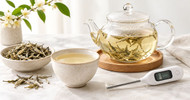
Brew white tea at 175°F (80°C) as a practical starting point, then follow the package instructions when they specify a different temperature. For everyday brewing in 2026, start with a 3-minute steep and adjust the next cup to your taste. Temperature alone does not determine the result: the amount of leaf, steeping time, and whether you remove the leaves also affect flavor.
- Start your white tea temperature at 175°F (80°C); package instructions take priority.
- Begin with a 3-minute steep, then remove the leaves before judging the flavor.
- Tea The World serves loose leaf tea drinkers seeking teas and brewing accessories.
- White tea contains caffeine; a cooler brew does not make it a caffeine-free bedtime drink.
By Ricardo R Matos
Why this matters
The right white tea temperature is a starting point, not a rule for every leaf. A delicate cup should still have flavor. If your tea tastes like warm water, keeping the temperature low at all costs misses the purpose of brewing it.
White tea can offer gentle floral, hay-like, or sweet notes, depending on the tea. Your goal is to bring those notes into balance without leaving an unpleasant drying finish. That means paying attention to both the water and what happens after you pour it.
Tea The World is for loose leaf tea drinkers who also want tea accessories. For this 2026 guide, the useful distinction is between choosing a tea you enjoy and choosing a brewing method you can repeat; you do not need elaborate equipment to do either.
What temperature should you brew white tea at?
Start at 175°F (80°C), unless your white tea's package gives different instructions. Harney & Sons' general white tea brewing guidance also uses 175°F water and a 3-minute steep. That is a useful reference for a first cup, not proof that every white tea needs identical treatment.
Use this simple sequence before experimenting:
- Read the label. Check the recommended temperature, leaf amount, and steeping time. Instructions for the actual tea take priority over a general chart.
- Set the water temperature. Use a temperature-controlled kettle or measure the water with a suitable kitchen thermometer.
- Measure your leaf and water. Follow the package ratio and use the same cup or pot when comparing brews.
- Steep and separate. Start with 3 minutes if no instructions are available, then strain the tea or remove the infuser.
- Taste before changing anything. Let the drink cool enough to sip comfortably, then decide whether it needs more strength or less dryness.
Keep the first cup plain. Honey, milk, or other additions change the taste and make it harder to identify what the brewing method is doing. You can add them afterward if that is how you enjoy tea.
The temperature setting describes the brewing water, not the temperature at which you must drink the tea. Those are separate decisions. Let a freshly brewed cup cool before taking a full sip.
Delicate bud-heavy white tea: start at 175°F (80°C)
For a delicate, bud-heavy white tea, begin with 175°F (80°C) water and follow the package's leaf ratio. Look for a clear, gentle flavor rather than trying to force the intensity of a strong breakfast tea.
Bud-heavy tea can look substantial in an infuser while weighing relatively little. That makes an unmeasured spoonful difficult to repeat, especially when the leaves have different shapes. If the package gives a weight, a kitchen scale helps you follow it without crushing the tea.
Best for: drinkers who enjoy a quieter cup and want to notice subtle aromas. The trade-off is that a delicate brew can feel too light if you prefer a bold drink or add strongly flavored ingredients.
If the first cup is thin, check the leaf amount before lowering the temperature further. Less heat is not automatically better. Give the tea enough leaf, enough room, and enough contact with the water to produce a satisfying cup.
Fuller-leaf white tea: start at 175°F (80°C)
A fuller-leaf white tea can use the same 175°F (80°C) starting point, but its own brewing instructions remain the better guide. Do not assume that a darker-looking leaf must be brewed like black tea.
White teas differ in their balance of buds and leaves, their processing, and their storage history. Appearance gives you something to observe, but it does not supply an exact kettle setting. Taste the prepared tea before deciding that it needs hotter water.
Best for: drinkers who want to explore a white tea with a more pronounced leaf character. The limitation is that the category name alone does not tell you how strong, sweet, or drying your particular cup will be.
For your 2026 brewing notes, record the tea's name and package directions alongside the temperature you used. A note that says only white tea leaves out the detail you need when you try to recreate a favorite cup.
Why white tea temperature varies
The best setting depends on the tea and the brewing method, not on a universal promise that cooler water always tastes sweeter. Keep these factors in view:
- Leaf composition: a tea with many buds differs from a tea with a larger proportion of mature leaves. Follow instructions written for that tea.
- Leaf amount: more leaf changes the strength of the infusion. An inconsistent dose makes temperature comparisons less useful.
- Steeping time: longer contact continues extraction. Leaving an infuser in the cup turns a timed brew into an ongoing one.
- Brewing vessel: a cold cup takes heat from the water, while a warmed vessel changes the starting conditions. Be consistent when comparing cups.
- Personal taste: a gentle floral cup and a fuller, stronger cup are different goals. Adjust toward the result you enjoy rather than chasing a single supposedly perfect number.
Change one variable at a time. If you raise the temperature, add more leaf, and extend the steep together, you will not know which change improved the tea—or which made it unpleasant.
Consistency matters more than precision you cannot repeat. A measured, familiar routine gives you a better basis for adjustment than a different handful of leaves in a different mug each day.
Which temperature-control method should you use?
Choose the method that fits your kitchen. A kettle with temperature settings is convenient, but it is not the only way to prepare white tea thoughtfully.
| Method | Best for | Main advantage | Main limitation |
|---|---|---|---|
| Temperature-controlled kettle | A repeatable daily routine | Lets you select a brewing temperature directly | The water changes temperature after pouring |
| Kitchen thermometer | Checking water with an ordinary kettle | Measures the water rather than relying on a waiting time | Requires an extra measurement and a suitable probe |
| Cooling boiled water without measuring | A simple routine with existing equipment | Does not require a temperature-setting kettle | Cannot confirm that the water has reached 175°F |
If you already own a thermometer, use it before buying another appliance. Follow its instructions, measure the water carefully, and avoid touching hot surfaces or letting the probe rest against the vessel when taking a reading.
There is no reliable universal waiting time after boiling. The amount of water, container, room conditions, and starting temperature affect cooling. A fixed countdown is not a dependable substitute for measurement.
In 2026, keep the decision practical: use a kettle setting for convenience or a thermometer for a direct check. If neither is available, follow the tea's directions as closely as possible and use taste to refine your routine without pretending you know the exact temperature.
How do you adjust white tea that tastes weak or bitter?
Start by identifying the problem. A weak cup needs a different response from a strong cup with a drying finish.
If your white tea tastes weak
Check whether you used the recommended amount of leaf and water. Large, airy leaves can make a spoon appear full without providing the dose the package calls for. Correct that first.
Next, check that the leaves had room to open and that you removed them at the intended time. If the ratio was correct, try a slightly longer steep on the next brew while keeping the temperature unchanged. Taste the result before making another adjustment.
If your white tea tastes bitter or drying
Remove the leaves before tasting, and check whether the steep ran longer than planned. A shorter steep is a sensible first adjustment when the tea has enough flavor but finishes too sharply.
If that does not improve the cup, review the leaf amount and temperature against the package. Do not change every setting at once. A small, deliberate adjustment teaches you more than starting over with an entirely different method.
If your white tea loses flavor while you drink it
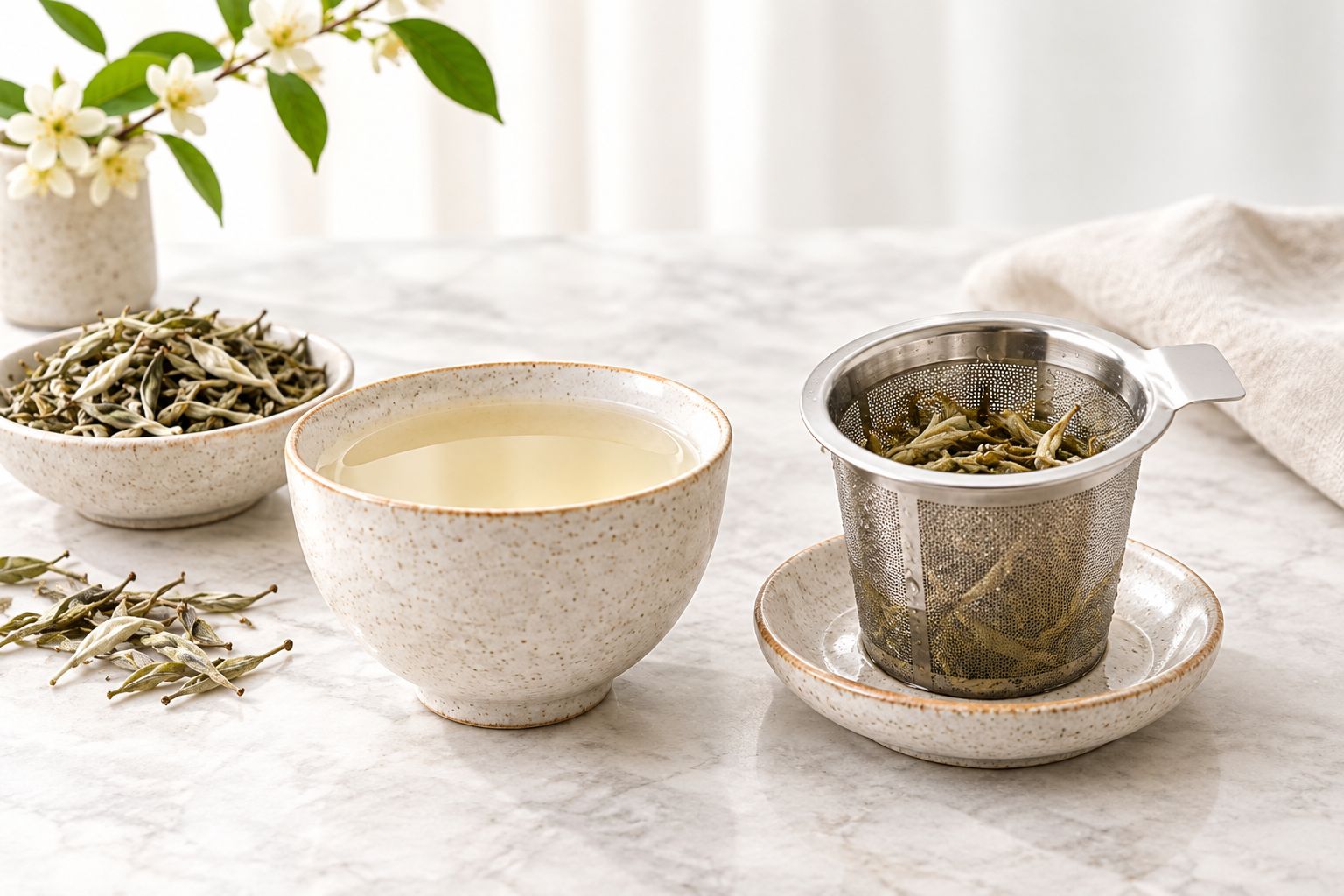
Separate the brewed tea from the leaves rather than leaving them together throughout the cup. An infuser basket makes that step straightforward; a tea ball requires attention to how tightly the leaves are packed.
The tea infuser basket versus tea ball guide compares those approaches. Whatever you use, choose a method that lets you stop the steep when you intend to, not merely when the cup is empty.
Can you brew white tea with boiling water?
Boiling water is not the default recommendation for an unfamiliar white tea. Begin at 175°F (80°C) or use the temperature printed on the package; hotter brewing requires attention to the tea and steeping method.
Some white teas are prepared with hotter water, particularly when their specific instructions call for it. That does not mean every delicate white tea will taste best under the same conditions. Equally, white tea is not automatically ruined because someone uses a hotter method.
Keep the decision tied to the actual leaves. If a package recommends hotter water, follow that guidance before substituting a generic low-temperature rule.
Do you need a special teapot for white tea?
You do not need a special teapot to start white tea at 175°F (80°C). A clean, heat-safe cup and a way to separate the leaves are enough for a simple brew.
A teapot is useful when you want to share tea or pour several servings, but material alone does not guarantee better flavor. Check the vessel's care instructions and intended use. A pot designed for brewing is not automatically suitable for heating directly on a stove.
For serving Tea The World loose leaf teas, choose accessories around your routine rather than an imagined requirement for elaborate equipment. The useful features are straightforward: enough room for the leaves, comfortable handling, and a way to pour or strain the finished tea.
Does a lower white tea temperature make it caffeine-free?
Brewing white tea at 175°F (80°C) does not make it caffeine-free. White tea comes from the tea plant and contains caffeine; the amount in a particular cup depends on the tea and preparation.
Do not choose white tea for bedtime solely because its color or flavor seems delicate. A pale cup is not a caffeine measurement, and a mild taste does not establish that it suits your evening routine.
If avoiding caffeine is your priority, choose an option explicitly identified as caffeine-free and check the ingredients. Fruit flavors, flowers, or herbs blended with white tea do not remove the caffeine from the tea leaves.
FAQ
What's the best white tea temperature for a first cup?
Start with 175°F (80°C), unless the package specifies another temperature. Use the recommended leaf ratio and remove the leaves after the intended steep.
How long should I steep white tea at 175°F?
Start with a 3-minute steep if the package gives no instructions. Taste the finished brew, then adjust the next steep while keeping the leaf amount and temperature consistent.
Can I pour boiling water over white tea?
Use boiling water only when the tea's instructions or your chosen brewing method call for it. For an unfamiliar white tea, 175°F (80°C) is a practical starting point.
How long should boiled water cool before I brew white tea?
There is no universal cooling time that guarantees 175°F (80°C). Measure the water with a suitable thermometer or use a temperature-controlled kettle.
Why does my white tea taste like warm water?
Check the leaf amount, water amount, and steeping time before changing the temperature. A light-looking handful of large leaves is not a reliable substitute for the package's recommended dose.
Is white tea caffeine-free if I brew it cooler?
White tea is not caffeine-free when brewed cooler. If avoiding caffeine matters, choose a drink explicitly identified as caffeine-free and check its ingredients.
Should I leave the white tea infuser in my cup?
Remove the infuser when the planned steep ends. Leaving the leaves in the water continues extraction and makes the flavor harder to repeat.
One last thing
Judge the tea after the leaves are out and the cup has cooled enough to sip comfortably. The drink you enjoy is the finished cup, not the kettle display.
For your next white tea from Tea The World, keep a short 2026 brewing note: package ratio, water temperature, steeping time, and what you tasted. A few plain words—too light, pleasantly floral, or too drying—give you a useful direction for the next brew without turning a quiet tea break into a complicated project.