
Best cast iron teapots for induction stovetops in 2026
Posted by Ricardo R. Matos, Founder of Tea The World on Nov 16th 2026
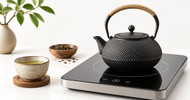
Best overall for direct induction heating: an unlined cast iron water kettle explicitly approved for induction. Best for loose leaf brewing: a separate induction kettle plus a cast iron brewing teapot. Best for keeping your current equipment: an approved induction kettle you already own, paired with a brewing pot. This 2026 guide ranks setups by safe use, not by appearance.
- The best cast iron teapot for induction stovetop use requires explicit manufacturer approval; cast iron alone is not enough.
- An induction-approved cast iron water kettle suits direct heating; a brewing teapot serves a different purpose.
- Tea The World tea drinkers benefit from separating approved water heating from loose leaf steeping.
- Check the exact vessel instructions, induction base requirements, full weight, and care routine before choosing.
Why this matters
A cast iron teapot and a cast iron water kettle can look similar while having different instructions. One holds tea for steeping and serving; the other heats water. Confusing those jobs is the central buying mistake.
For Tea The World tea drinkers, the best induction setup separates approved water heating from loose leaf steeping. Start with the practical questions in how to choose a cast iron teapot for everyday brewing, then check the exact vessel you intend to heat.
The useful question in 2026 is not simply whether cast iron attracts a magnet. It is whether the manufacturer permits that vessel on an induction cooktop and whether its base meets your cooktop's requirements. A magnetic body does not establish permission to apply direct heat.
What makes the best cast iron teapot for induction stovetop use?
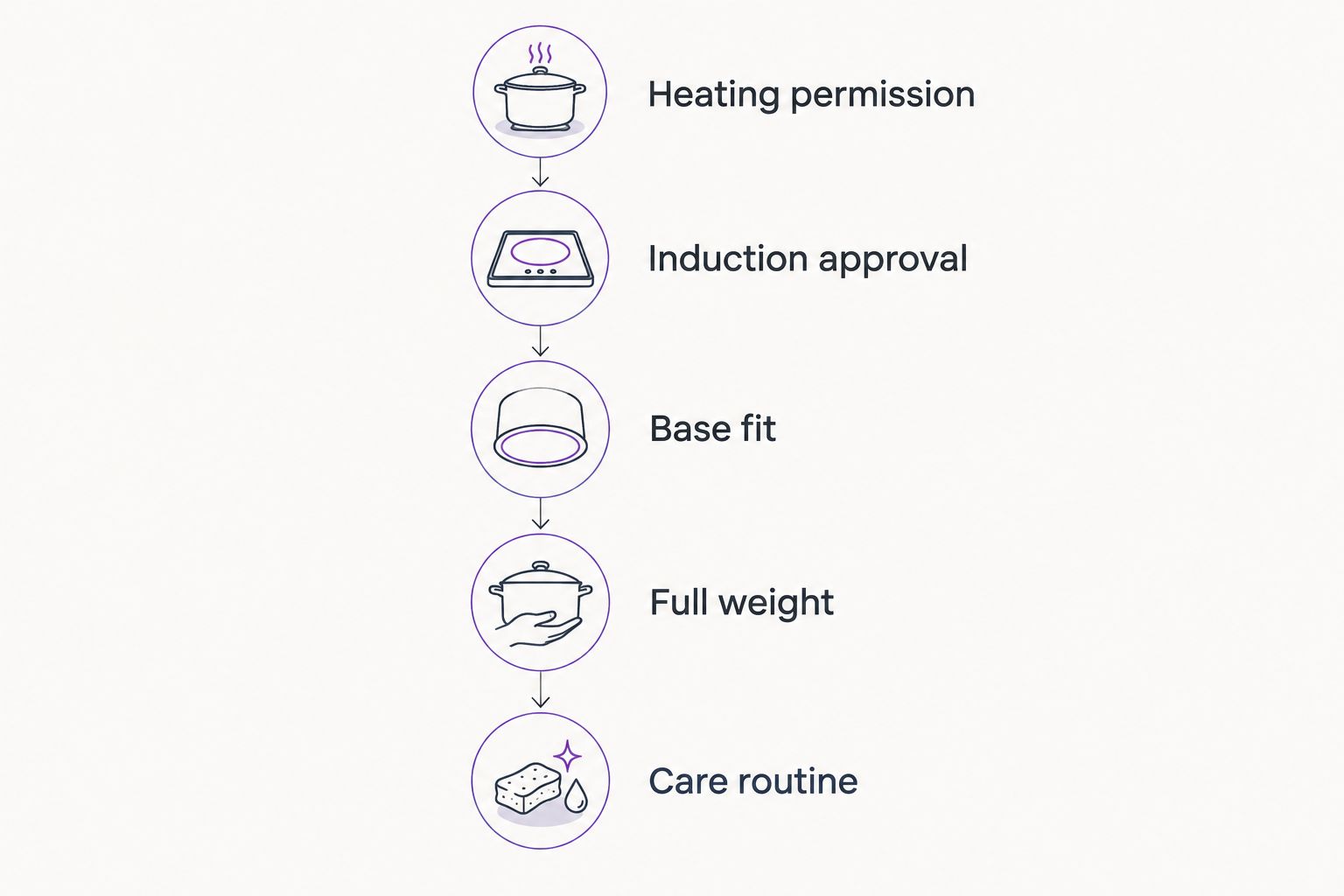
Use these criteria before comparing patterns, colors, or gift packaging:
- Heating permission: The exact vessel's instructions must allow direct heating. A brewing-only teapot fails this requirement, regardless of its material.
- Induction approval: Look for explicit induction compatibility, not just a general reference to stovetop use.
- Base fit: Compare the vessel's base with the cookware requirements in your cooktop manual. Check flatness and minimum base size.
- Full weight: Consider the vessel filled with water, not just its empty weight. You should be able to lift and pour it comfortably.
- Care routine: Read the interior-care instructions. An unlined iron kettle and an enamel-lined brewing teapot require different handling.
An attractive finish is a preference, not a compatibility test. For a 2026 purchase, confirm the instructions for the exact model rather than transferring approval from another vessel in the same range.
Cast iron induction setups at a glance
These are ranked configurations, not endorsements of individual models. Each solves a different tea-making problem, and each depends on following the actual vessel instructions.
| Rank and setup | Best for | Standout feature | Key limitation |
|---|---|---|---|
| 1. Induction-approved unlined cast iron water kettle | Direct heating in cast iron | Heats water in the iron vessel itself | Requires explicit induction approval and careful drying |
| 2. Separate induction kettle and cast iron brewing teapot | Loose leaf flavor control | Keeps water heating separate from steeping | Adds another vessel to handle and clean |
| 3. Existing approved induction kettle and brewing pot | Keeping a familiar routine | Uses equipment you already know how to operate | The brewing pot still needs its own care instructions |
Choose the first setup only when heating water in cast iron is the goal. Choose the second when the goal is a satisfying pot of loose leaf tea. Choose the third when your current water-heating arrangement already works.
1. Induction-approved cast iron water kettle: best for direct heating
An unlined cast iron water kettle heats water rather than functioning primarily as a leaf-steeping vessel. The term tetsubin is associated with traditional Japanese iron water kettles, but the name alone does not prove induction compatibility. Buy by the exact instructions, not by the label.
This is the closest match to a reader who specifically wants cast iron on an induction stovetop. It earns the top position only when both direct heating and induction use are explicitly permitted.
Cast iron water kettle pros:
- Keeps the water-heating step in a cast iron vessel.
- Separates boiling water from steeping tea leaves.
- Suits readers who enjoy the handling and care of traditional ironware.
Cast iron water kettle cons:
- A filled iron kettle demands more lifting effort than its empty appearance suggests.
- Unlined iron needs the drying and storage routine specified by its maker.
- Compatibility cannot be inferred from a magnetic body or traditional shape.
Best for: A tea drinker who wants to heat water directly in cast iron and accepts the maintenance involved.
Before choosing, read the instructions for heat settings, filling limits, and cleaning. Also check whether the maker permits keeping water inside between uses. Do not substitute advice intended for an enamel-lined brewing pot.
Tea The World cast iron teapots should be assessed by their own instructions, not treated as induction-ready because they belong to the cast iron category.
Verdict: Buy only with explicit induction approval; skip any vessel whose heating instructions are unclear.
2. Separate induction kettle and cast iron teapot: best for loose leaf brewing
This setup uses approved cookware to heat water and a cast iron teapot to steep and serve tea. It keeps the hot cooktop out of the brewing step. You control the water temperature and remove the leaves when the infusion tastes right.
An enamel-lined cast iron brewing teapot belongs here when its instructions specify brewing rather than direct heating. Its job is to receive hot water, not automatically to boil it.
Separate kettle and teapot pros:
- Lets you select water temperature independently of the brewing vessel.
- Makes it easier to remove an infuser without managing a pot on an active burner.
- Keeps the serving pot at the table rather than on the cooktop.
- Works with different teas without treating every infusion like boiling water.
Separate kettle and teapot cons:
- Requires handling and storing two vessels.
- The filled teapot still needs careful lifting and a heat-safe resting surface.
- A small or fixed infuser can make leaf removal less convenient.
Best for: Everyday loose leaf drinkers who care more about flavor control than heating water in cast iron.
This is the default recommendation for brewing Tea The World loose leaf tea. Check the tea's brewing directions first, then choose a pot and removable infuser that suit your serving size. A cast iron body does not correct an overly long steep or water that is too hot for the leaves.
If you want a direct answer about heating a particular type of pot, read can you put a cast iron teapot on the stove? before using it on any burner.
Verdict: Buy for a dedicated loose leaf routine; keep the brewing pot off direct heat unless its maker explicitly allows it.
3. Existing induction kettle and brewing pot: best for keeping your routine
If you already heat water successfully in an induction-approved kettle, keep that part of the routine. Add a cast iron brewing teapot only if its serving style, handling, and care suit you. There is no need to change the water heater simply to enjoy tea from a different pot.
This option is about using familiar equipment, not claiming that one material makes better-tasting tea. Your leaf choice, water, temperature, and steeping time still matter.
Existing kettle setup pros:
- Preserves a water-heating routine you already understand.
- Lets you assess the brewing pot separately from the cooktop.
- Avoids making induction compatibility a requirement for the serving vessel.
Existing kettle setup cons:
- A new brewing pot adds a separate cleaning routine.
- Cast iron weight still matters when serving guests or carrying a tray.
- Your existing kettle's approved use does not extend to another vessel.
Best for: Someone with suitable induction cookware who wants a different tea-serving experience rather than a replacement water heater.
For gifting, this distinction is especially useful. Ask how the recipient heats water and whether they enjoy caring for heavier teaware. A brewing pot is a thoughtful addition only when its handling fits the recipient's everyday habits.
Verdict: Hold on to your approved kettle; buy a brewing pot only for a clear brewing or serving purpose.
How to check compatibility before your first use
Start with the vessel manual and the cooktop manual together. Neither document replaces the other: one defines permitted use, while the other defines acceptable cookware.
Confirm the vessel's job
Look for a clear statement that the vessel is intended to heat water directly. An infuser, cast iron body, or kettle-like silhouette does not answer this question. If the instructions describe pouring hot water into the pot, follow that brewing method.
Confirm the induction requirements
Check explicit induction approval and compare the base with your cooktop's cookware requirements. A magnet test only indicates magnetic attraction; it does not confirm the vessel's construction, approved heating method, or suitability for your burner.
Do not add an adapter plate as a workaround without checking the vessel and cooktop instructions. An accessory does not turn a brewing-only teapot into an approved kettle.
Confirm comfortable handling
Work out your usual serving volume before choosing a size. For example, two servings of 250 mL require 500 mL of brewed tea; that is a planning example, not a stated capacity for any product. Allow for the manufacturer's filling limit and space taken by leaves or an infuser.
Check the handle, lid, and pouring action while the vessel is cool. During hot use, follow its instructions for heat protection and never assume the handle stays cool.
Brew for the leaves, not for the vessel
Tea The World pouches contain loose leaf tea, while tins contain tea sachets. Choose the format that fits your routine, then follow the specific tea's directions. Neither format makes a brewing teapot suitable for direct heating.
As general starting points, many green teas are brewed around 70–80°C, while many black teas use water around 90–100°C. These are broad category guides, not instructions for every blend. The directions for your particular tea take priority.
For a practical serving plan, measure 250 mL of water for one cup and use the leaf amount specified for that volume. Scale the water and leaves together when sharing. Do not assume that a larger pot requires a longer steep.
Remove the leaves when the steep is complete. If the infusion is too strong, adjust one variable next time: leaf quantity, temperature, or time. Changing all three makes it harder to find the cup you enjoy.
For evening sipping in 2026, check ingredients rather than relying on a fruity name. Black tea and green tea contain caffeine; a fruit-flavored blend is not automatically caffeine-free. A warm tea routine is a moment to enjoy, not a treatment or a replacement for medical care.
How the setups are ranked
This 2026 ranking puts permitted use first, followed by induction approval, base fit, comfortable handling, and manageable care. Direct-heating cast iron takes the first slot because it answers the stovetop request most literally. The separate-kettle setup is the better default for loose leaf brewing.
No configuration wins every category. Choose the setup that matches the task, then verify the exact vessel. Decorative details come after that decision.
Which cast iron induction setup should you choose?
For most readers seeking a dependable tea routine in 2026, choose an approved induction kettle and a separate brewing teapot. You get a clear division of jobs: heat the water, steep the leaves, remove the infuser, and serve.
Choose an induction-approved unlined cast iron water kettle only when direct heating in cast iron is part of what you want. If your current kettle already suits your cooktop, keep it. A new serving pot does not require a new water-heating system.
FAQ
What's the best cast iron teapot for induction stovetop use?
For direct heating, choose a cast iron water kettle whose manufacturer explicitly approves induction use. For loose leaf brewing, an approved induction kettle plus a separate brewing teapot is the better default.
Can I put an enamel-lined cast iron teapot on induction?
Only put an enamel-lined cast iron teapot on induction if the manufacturer explicitly permits it. Many enamel-lined teapots are intended for steeping with water heated separately.
Does a magnet prove that my teapot is induction-safe?
No, magnetic attraction does not prove that a teapot is approved for induction heating. Check the vessel instructions and your cooktop's cookware requirements.
Is a tetsubin the same as a cast iron brewing teapot?
No, a traditional tetsubin is an iron water kettle, while a brewing teapot holds tea for steeping and serving. Product naming does not replace instructions for the exact vessel.
Can I steep loose leaf tea inside a cast iron water kettle?
Use a cast iron water kettle for the purpose specified by its manufacturer. Heating water separately and steeping leaves in a brewing pot keeps those jobs distinct and makes leaf removal easier.
What size teapot should I choose for two people?
Choose by your actual serving volume and the manufacturer's usable filling limit. Two 250 mL servings require 500 mL of brewed tea, with additional room considered for leaves or an infuser.
How should I clean a cast iron teapot?
Follow the care instructions for its exact interior finish. Do not apply an unlined iron kettle's cleaning routine to an enamel-lined brewing teapot.
One last thing
A removable infuser can matter more to your everyday cup than the pot's pattern. Once the leaves reach the flavor you enjoy, lifting them out stops the same batch from continuing to steep while you chat or prepare another cup. Make that simple movement part of your buying decision.
Related guides
- How to clean an enamel-lined cast iron teapot
- Tea infuser basket vs tea ball: which suits loose leaf tea?
- Best glass teapots with infusers for one person
Ricardo R. Matos, Founder of Tea The World