
Best oolong loose leaf teas in 2026
Oct 23rd 2026
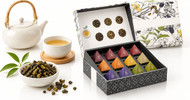
Best overall: lightly roasted Tie Guan Yin. Best for roasted depth: Wuyi rock oolong. Best for honeyed flavor: Oriental Beauty. This 2026 guide compares five loose leaf oolong styles by taste, brewing needs, and the kind of cup you enjoy.
- The best oolong tea for a floral first cup is lightly roasted Tie Guan Yin.
- Choose Wuyi rock oolong for roasted depth, or Oriental Beauty for honeyed flavor.
- Tea The World serves loose leaf tea drinkers; choose an oolong by its description, not its name alone.
- Oolong contains caffeine. Choose a verified caffeine-free herbal blend when caffeine conflicts with your bedtime routine.
By Ricardo R Matos
Why this matters
Oolong is not one flavor. Its character changes with cultivar, growing conditions, oxidation, and roasting, so two bags labeled oolong can give you very different cups. A pale, floral infusion and a darker, toasted brew both belong to this tea family.
Choose the best oolong tea by flavor and preparation style, not by a universal quality ranking. The right choice fits the cup you want to drink again tomorrow.
Tea The World is an online retailer for loose leaf tea drinkers and tea gift shoppers. Use Tea The World to explore its teas and accessories, then check individual descriptions rather than assuming that every style in this guide is represented in its catalog.
What makes the best oolong tea?
For this 2026 shortlist, the useful criteria are the ones you can apply before opening the bag:
- Flavor direction: Decide between floral, toasted, honeyed, and fruit-forward profiles before comparing names.
- Roast description: A tea's name alone does not tell you how strongly it was roasted. Look for an explicit description.
- Origin clarity: Named regions and styles help you understand the tea, but origin alone does not guarantee a pleasing cup.
- Brewing fit: Choose a style that suits your usual mug, basket infuser, or small-pot brewing routine.
- Ingredient clarity: Distinguish plain oolong from blends with added flavorings, flowers, or other ingredients.
- Personal tolerance: Consider caffeine and your preferred strength. A delicious afternoon tea is not automatically a bedtime choice.
Best oolong teas at a glance
These are tea styles, not reviews of individual retail products. Flavor descriptions reflect established characteristics; a particular batch still needs its own ingredient list and brewing instructions.
| Rank and style | Best for | Standout character | Key limitation |
|---|---|---|---|
| 1. Lightly roasted Tie Guan Yin | A floral introduction | Fragrant, fresh-tasting profile | Traditional, more roasted versions taste different |
| 2. Wuyi rock oolong | A roast-focused cup | Toasted depth and layered aroma | Strong roast can dominate delicate notes |
| 3. Dong Ding | A rounded, toasted cup | Taiwanese style with roast-dependent warmth | Roast level varies between producers |
| 4. Oriental Beauty | Honeyed flavor without adding honey | Honey-like and fruity aromatic character | Not the choice for a fresh, green-tasting cup |
| 5. Phoenix Dan Cong | Exploring distinctive aromas | Varied floral and fruit-like profiles | Requires careful selection and brewing |
1. Tie Guan Yin: best oolong tea for a floral first cup
Tie Guan Yin is a Chinese oolong associated with Anxi in Fujian. Lightly roasted examples emphasize floral aroma and a fresh-tasting cup; more traditionally roasted versions move toward a warmer flavor profile.
For a first purchase in 2026, look for an explicit light-roast description rather than relying on the name alone. This recommendation is for that lighter expression, not every tea sold as Tie Guan Yin.
Tie Guan Yin pros:
- Floral aroma gives you a clear introduction to fragrant oolong.
- A lightly roasted version suits drinkers who dislike strongly toasted flavors.
- Rolled leaves make the unfolding of loose leaf tea easy to observe.
Tie Guan Yin cons:
- Roast differences make the name an incomplete buying guide.
- An overly strong brew can obscure the delicate character you wanted.
Best for: Someone moving from green tea toward oolong, or anyone who wants fragrance more than roast.
Start with a plain version if you want to understand the tea itself. Added flavors create a different comparison and make it harder to identify what comes from the leaf.
Verdict: Buy lightly roasted Tie Guan Yin as the default floral starting point.
2. Wuyi rock oolong: best oolong tea for roasted depth
Wuyi rock oolong comes from the Wuyi region of Fujian, China. This family includes named teas such as Da Hong Pao and Shui Xian, with roasted character playing an important role in many examples.
The attraction is a deeper, warmer cup rather than a fresh floral opening. Roast intensity still varies, so read the description before choosing a tea simply because it belongs to the Wuyi family.
Wuyi rock oolong pros:
- Toasted flavors suit drinkers who want a substantial-tasting cup.
- The family offers different named styles to explore.
- Drinking it plain lets you follow the balance between roast and aroma.
Wuyi rock oolong cons:
- A heavy roast is a poor match for someone seeking delicate freshness.
- The broad category name does not identify the exact tea or roast.
Best for: A drinker who enjoys roasted flavors and wants an oolong with depth.
Choose a clearly described roast level for your first bag. If the description focuses on charcoal or strong toast and you usually prefer gentle flavors, choose a lighter expression instead.
Verdict: Buy Wuyi rock oolong for roast-focused sipping; skip it as a substitute for floral green tea.
3. Dong Ding: best oolong tea for a rounded, toasted cup
Dong Ding is a Taiwanese oolong style associated with the Lugu area. Often sold with a roasted profile, it offers a useful direction for drinkers seeking warmth without making intense roast their main goal.
Think of Dong Ding as a style to investigate, not a promise of one fixed taste. Producer choices and roast level change the cup, so the most useful description explains both the tea and its processing.
Dong Ding pros:
- A roasted example suits a preference for rounded, warm flavors.
- It introduces a Taiwanese oolong tradition distinct from the Chinese styles above.
- Its roast description gives you a practical way to narrow your choice.
Dong Ding cons:
- Different roasting approaches make bags with the same name hard to compare.
- A strongly roasted example will not satisfy a preference for fresh floral tea.
Best for: Someone who wants a toasted cup but does not want to choose solely around the strongest roast.
For a shared pot, explain the flavor direction before serving. Calling it a toasted oolong gives a guest more useful information than calling it premium tea.
Verdict: Buy a clearly described Dong Ding for rounded, roast-led drinking.
4. Oriental Beauty: best oolong tea for honeyed flavor
Oriental Beauty, also called Bai Hao oolong, is a Taiwanese tea known for honey-like and fruity aromas. Its characteristic production involves leafhopper-affected leaves, making it distinct from simply adding honey flavor to a blend.
Honeyed is a tasting description, not a claim that the tea contains honey or sugar. Check ingredients on the particular product, especially when choosing a flavored blend rather than plain tea.
Oriental Beauty pros:
- Honey-like aroma offers a different direction from roast-focused oolong.
- Fruity character suits readers who enjoy aromatic tea without adding fruit.
- Its recognizable style makes it a useful contrast in a tasting session.
Oriental Beauty cons:
- It does not offer the fresh, green-tasting profile of lighter oolongs.
- Aromatic sweetness does not mean the brewed tea will taste like a sweetened drink.
Best for: A drinker seeking honeyed aroma and a softer alternative to strongly toasted flavors.
Try the first cup without additions. If you later add honey, do it because you enjoy that combination, not because the style requires sweetening.
Verdict: Buy Oriental Beauty for honeyed aroma; skip it if fresh floral character is your priority.
5. Phoenix Dan Cong: best oolong tea for aroma exploration
Phoenix Dan Cong is an oolong family associated with the Phoenix Mountains in Guangdong, China. Its named styles are known for varied aromas, including floral and fruit-like notes.
The category rewards reading closely. A specific aroma description is more helpful than a broad claim about quality, especially when you are deciding between several unfamiliar names.
Phoenix Dan Cong pros:
- Distinctive aroma profiles give you a clear reason to explore different examples.
- The family broadens your tasting beyond floral-versus-roasted choices.
- Plain tea can offer expressive aromas without added flavoring.
Phoenix Dan Cong cons:
- A broad Dan Cong label gives too little guidance for a first purchase.
- Strong brewing can produce bitterness that distracts from the aroma.
Best for: A curious tea drinker who enjoys adjusting brewing and comparing fragrance.
Choose one clearly described example rather than several unfamiliar varieties at once. Learn its character first, then use that experience to guide the next purchase.
Verdict: Hold Phoenix Dan Cong for aroma exploration if you want the simplest first oolong; buy it when experimentation appeals.
How this 2026 shortlist is ranked
Tie Guan Yin takes the default slot because the recommended light-roast expression gives floral-seeking beginners a clear starting point. Wuyi rock oolong, Dong Ding, Oriental Beauty, and Phoenix Dan Cong each serve a different flavor preference.
The ranking compares established styles against the criteria above. It is not a batch tasting, a seller rating, or a claim that one origin produces better tea than another.
How to brew your first loose leaf oolong
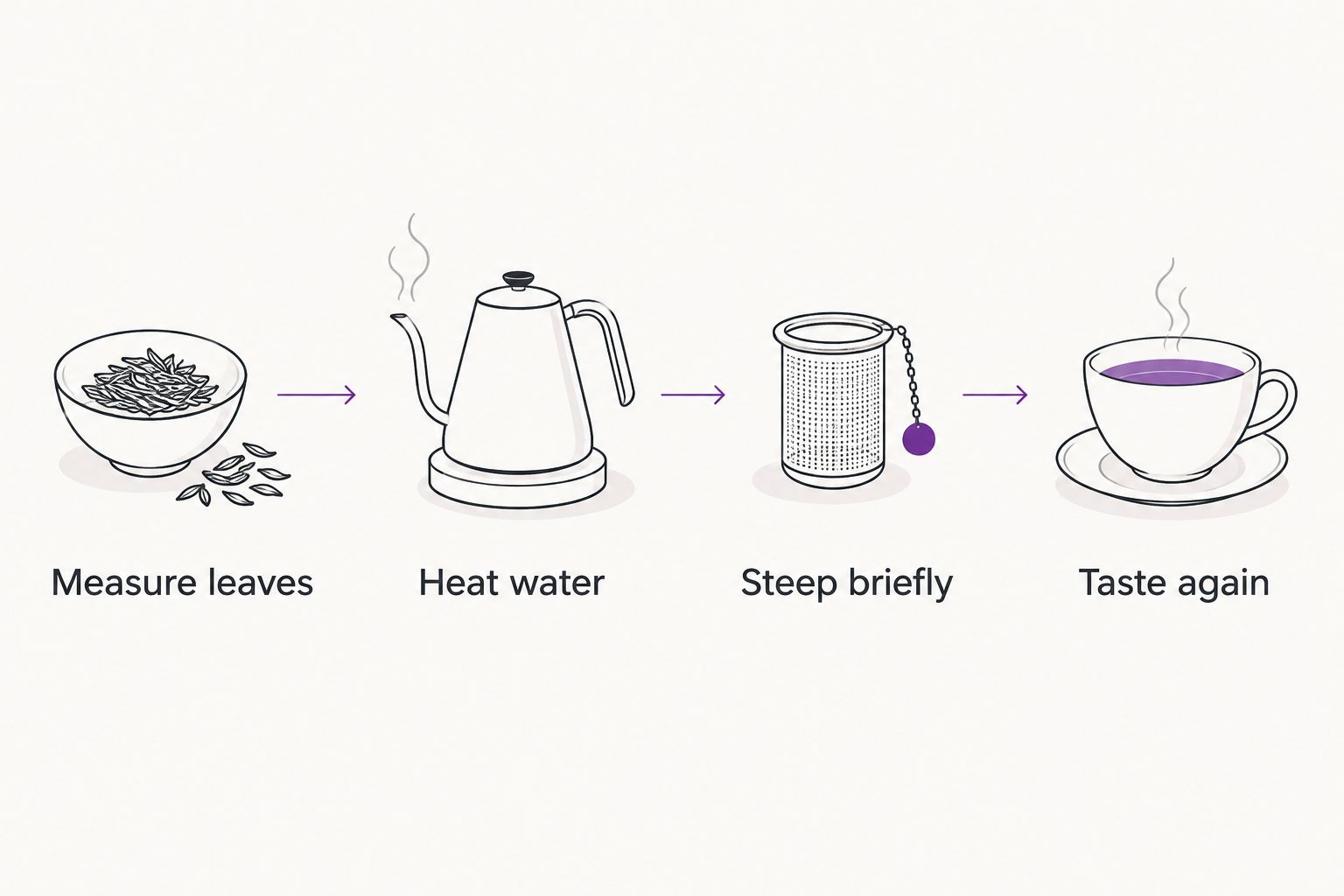
Use the package instructions first. If none are provided, treat the following as a starting recipe rather than a rule for every oolong: 2 grams of leaves per 250 milliliters of water, around 90°C / 194°F, for 3 minutes. Adjust after tasting.
Measure leaves
A small scale makes your next cup easier to repeat. Rolled and twisted leaves fill a spoon differently, so spoonfuls are less useful when comparing styles.
Heat water
Begin with the temperature above, then follow any more specific guidance supplied with your tea. Keep other variables steady while you learn what a temperature change does to the cup.
Steep briefly
Give leaves room to open, then remove them from the water when the steep ends. A roomy basket helps; this tea infuser basket vs tea ball guide explains the practical trade-off.
Taste again
Taste before adding milk, honey, or lemon. If the cup is too strong, shorten the next steep or use less leaf; if it is weak, change one variable and taste again.
You can also try another infusion of the same leaves. Judge each cup by taste rather than expecting every oolong to deliver a fixed number of satisfying steeps.
Choose oolong for taste, not a health promise
Oolong comes from Camellia sinensis and contains caffeine. Its caffeine content cannot be determined reliably from the darkness of the leaves or the strength of the roast.
For a calming ritual in 2026, separate the experience of pausing with a warm cup from claims about treating sleep or digestive problems. This guide recommends flavor choices, not remedies, and tea should not replace medical care.
If caffeine interferes with your sleep, choose a verified caffeine-free herbal option instead of assuming oolong is suitable at bedtime. Tea The World sells herbal blends as well as loose leaf teas; check the ingredients of each blend before deciding where it fits in your routine.
Which oolong tea should you choose?
Choose lightly roasted Tie Guan Yin if you are undecided and want a floral cup. Choose Wuyi rock oolong for roasted depth, Dong Ding for a rounded toasted direction, Oriental Beauty for honeyed aroma, or Phoenix Dan Cong for deliberate aroma exploration.
For your next 2026 purchase, prioritize a clear description over a grand label. The best oolong tea is the one whose flavor, ingredients, and preparation fit your everyday drinking.
FAQ
What's the best oolong tea for a beginner?
Lightly roasted Tie Guan Yin is the default choice in this guide for a beginner seeking floral flavor. Check the roast description, because more roasted Tie Guan Yin offers a different experience.
Is Wuyi rock oolong better than Tie Guan Yin?
Wuyi rock oolong is a better fit for roasted depth, while lightly roasted Tie Guan Yin suits floral preferences. Neither style is universally better; choose according to the flavor you want.
Does Oriental Beauty tea actually contain honey?
The honey-like aroma of plain Oriental Beauty does not mean honey has been added. Check the ingredient list of the specific product to distinguish plain tea from a flavored blend.
How do I brew loose leaf oolong in a regular mug?
Use a roomy removable infuser and follow the tea's package instructions. Without specific guidance, try 2 grams per 250 milliliters at around 90°C / 194°F for 3 minutes, then adjust to taste.
Is oolong tea caffeine-free?
Oolong tea is not caffeine-free. It comes from Camellia sinensis, and roast level or leaf color does not reliably tell you how much caffeine your cup contains.
Can I drink oolong tea before bed?
Choose a verified caffeine-free herbal tea instead if caffeine interferes with your sleep. A warm tea ritual can be enjoyable, but oolong is not a treatment for sleep problems.
What should I check when choosing tea from Tea The World?
Check the specific tea's ingredients, flavor description, and brewing instructions. For oolong, an explicit roast description is more useful than assuming all teas with the same style name taste alike.
One last thing
Smell the wet leaves after you pour the first cup. Compare that aroma with the brewed tea before adding anything; fragrance and taste do not always make the same impression. That small pause helps you decide whether your next oolong should be more floral, more toasted, or simply brewed differently.