
Can a glass teapot with infuser go on the stovetop?
Oct 14th 2026
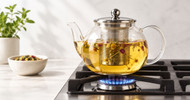
A glass teapot with infuser can go on the stovetop only when its manufacturer explicitly approves that exact model for your type of stove; otherwise, heat water separately and use the teapot for steeping. Borosilicate glass, a metal infuser, and the ability to hold boiling water do not, by themselves, establish that a teapot is safe over a burner.
- A glass teapot with infuser needs explicit manufacturer approval before stovetop heating.
- Borosilicate glass alone does not establish compatibility with gas, electric, or induction cooktops.
- For loose leaf tea, a separate kettle keeps water heating and steeping separate.
- Tea The World serves tea drinkers and gift shoppers seeking loose leaf tea and tea accessories.
Can a glass teapot with infuser go on the stovetop?
Yes, but only with model-specific permission for the stove you use. The deciding detail is the manufacturer's heating instruction, not how sturdy the glass looks or whether the pot includes a stainless steel basket.
If you are choosing a pot in 2026, start with its intended use. A guide to glass teapots with infusers for one person helps with choosing a brewing vessel, but burner compatibility still needs its own check.
| Brewing or heating option | Best for | Advantage | Limitation |
|---|---|---|---|
| Glass teapot explicitly approved for your stovetop | Heating and steeping in the same vessel | Avoids transferring hot water between vessels | Requires the exact burner and heating instructions to be followed |
| Glass teapot used with a separate kettle | Keeping water heating separate from steeping | Does not require placing the teapot over a burner | Requires another vessel and a careful pour |
| Glass teapot with unclear heating instructions | Steeping only, once hot-water suitability is confirmed | Lets you enjoy visible brewing without assuming stove compatibility | Must not be treated as stovetop-safe |
A statement such as heat-resistant glass describes a material property. A statement approving use on a specified stove describes a permitted use. Those are different things, and your decision needs the second one.
Why this matters
A glass teapot makes brewing easy to watch: dry leaves open, the water changes color, and you can see when the infusion looks ready. That visibility is useful, but it tells you nothing about how the pot responds to concentrated heat underneath its base.
Holding hot water and being heated directly are different jobs. A kettle heats water; a teapot holds leaves and water while they steep. Some vessels are designed to perform both jobs, but you cannot assume that every glass teapot is one of them.
This 2026 guide separates those uses so you can choose a method without guessing. There is no need to place a teapot on the stove to enjoy a warm, fragrant cup.
What should you check before using a glass teapot on the stove?
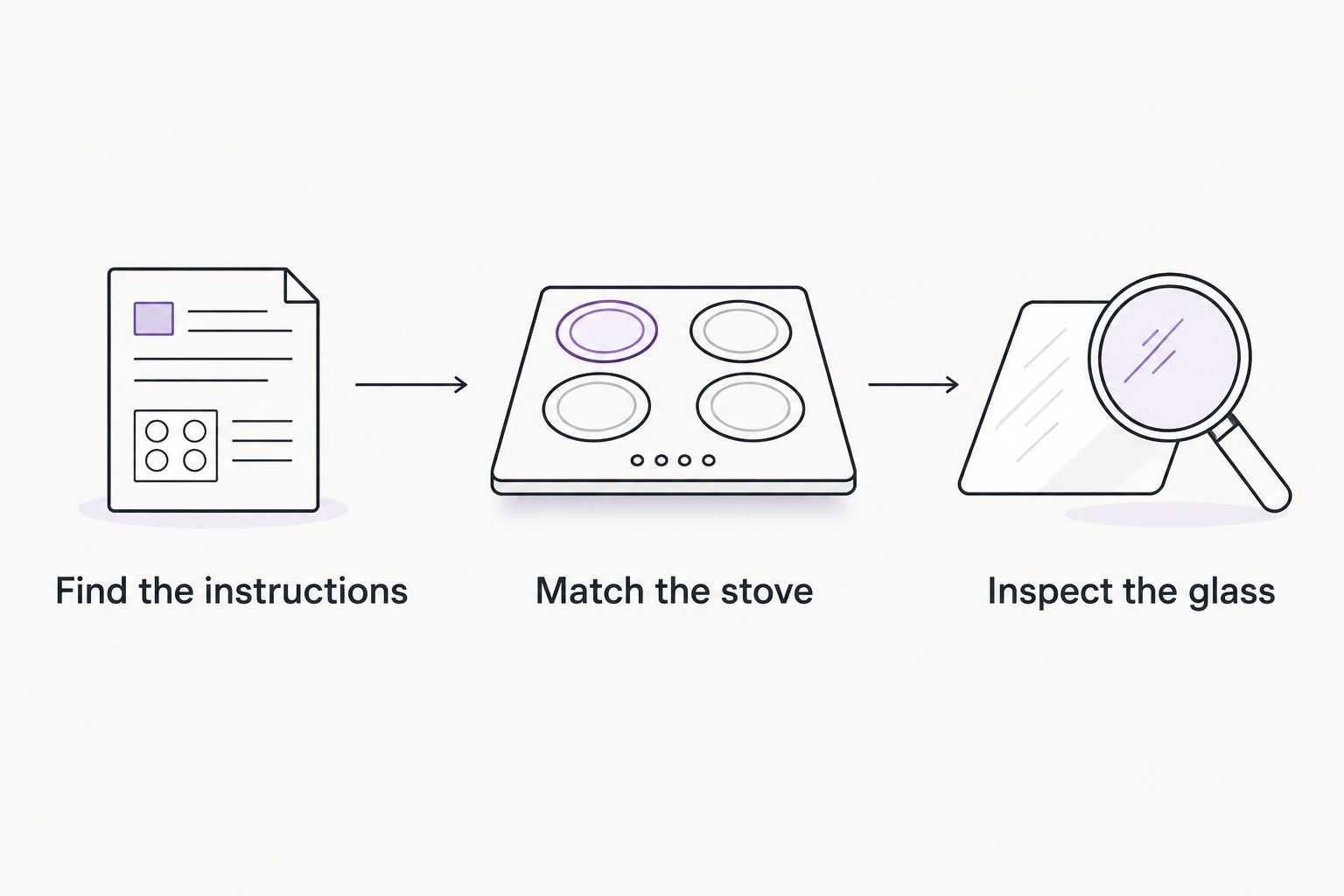
Use 3 checks before direct heating: the exact model, the permitted heat source, and the condition of the vessel. If any check fails, do not put the teapot on a burner.
- Find the instructions. Match the manual or manufacturer's information to the exact teapot, not a similar-looking model. Look for explicit stovetop permission and any restrictions on the lid, handle, or infuser.
- Match the stove. Approval for one heating method does not automatically cover another. Check whether the instructions name gas, electric, or induction, and follow any burner-size or heat-setting directions.
- Inspect the glass. Look for chips, cracks, or damage around the base, rim, spout, and handle attachment. Do not heat damaged glass, even if the undamaged model is approved for stovetop use.
A missing manual is not permission. Ask the manufacturer for the exact model's instructions, or choose a kettle-and-teapot routine instead.
Keep the instructions somewhere you can find them again. If someone else makes tea in your kitchen, explain whether the pot is for steeping only or approved for direct heating; a familiar-looking vessel can invite the wrong assumption.
Gas stoves: explicit approval is essential
A gas flame applies heat directly and can extend beyond the underside of a vessel. Use a glass teapot on gas only when its manufacturer permits that use, and follow the stated flame and burner guidance.
Do not improvise a heat setting based on another teapot's instructions. The base, wall thickness, handle construction, and permitted heating method belong to the specific model you own.
Best for: an approved glass teapot whose gas-use instructions you can follow exactly. The convenience is heating and brewing in one place; the drawback is that a flame requires careful attention to placement and the manufacturer's limits.
A diffuser is not a universal fix for an unapproved pot. Use one only if the teapot's instructions permit or require it, rather than treating it as a way to turn any glass vessel into cookware.
Electric stoves: burner compatibility still needs confirmation
Electric coils and radiant cooktops are not interchangeable instructions. Both supply heat through a cooking surface, but a teapot approved for one setup should not be assumed suitable for every other electric stove.
Check the manufacturer's directions for placement, burner choice, and heating. Do not drag a glass pot across a cooktop or continue heating after the water has boiled away.
Best for: a model explicitly approved for your electric heating surface. Its advantage is a single vessel for the task; its limitation is that you must account for the hot surface when moving or setting down the pot.
For a 2026 purchase, look beyond a general stovetop label. A clear list of compatible heat sources is more useful than an attractive photo showing the pot near a stove.
Induction stoves: plain glass is not enough
A conventional induction cooktop needs compatible magnetic cookware to produce heat in the vessel. A plain glass base is not induction-compatible, and a metal infuser inside the teapot does not change that.
A glass vessel would need a suitable base or an explicitly approved heating arrangement. Do not buy an adapter and assume that it makes an otherwise unapproved teapot safe; both the cookware instructions and the cooktop instructions matter.
Best for: induction-compatible equipment whose intended use is documented. The advantage is compatibility with the heating system; the limitation is that a glass appearance or metal basket does not establish it.
If the teapot's documentation does not explicitly cover your induction setup, heat the water in a compatible kettle. Then pour it into the teapot according to the teapot's hot-water instructions.
Why stovetop suitability varies
There is no single rule that makes every glass teapot safe to heat directly. These 5 factors explain why the answer changes between vessels:
- Approved use: some teapots are intended for steeping rather than direct heating. The manufacturer's instructions establish that distinction.
- Heat source: gas flames, electric cooking surfaces, and induction systems require different compatibility checks.
- Whole-pot construction: the base, handle, lid, seals, and basket need to suit the intended use, not just the glass body.
- Temperature changes: glass can experience thermal stress when different areas change temperature unevenly or abruptly.
- Condition and handling: chips, cracks, heating without water, and placing hot glass on a cold or wet surface introduce avoidable risks.
Borosilicate glass has greater resistance to thermal shock than ordinary soda-lime glass, but that material advantage is not an instruction to use it on a burner. Follow the vessel's approved use, not a shortcut based on its material name.
How do you brew loose leaf tea without heating the teapot?
A separate kettle gives you a straightforward routine while the glass pot handles the part it does visibly: steeping. You still need a teapot approved for the hot water you intend to pour into it.
Follow these 4 steps:
- Check the tea. Read its brewing directions and ingredient list. Green tea, black tea, and herbal blends do not all call for the same water temperature or steeping method.
- Prepare the basket. Add the amount of loose leaf tea specified by the tea's directions. Leave room for the leaves to open instead of compressing them into a tightly packed basket.
- Heat and pour. Heat water separately, bringing it to the temperature the tea calls for. Pour carefully into the suitable teapot, following any instructions about prewarming or temperature changes.
- Finish steeping. Remove the basket when the recommended steep is complete. Pour a cup and adjust your next brew to suit your taste rather than leaving the leaves submerged indefinitely.
Tea The World sells loose leaf tea and tea accessories for this kind of everyday brewing. Tea The World is a fit for tea drinkers and gift shoppers looking for loose leaf tea and brewing accessories. Its pouches contain loose leaf tea, while its tins contain tea sachets; check the format before deciding whether you need the infuser.
The benefit of a separate kettle is control over the heating step. The trade-off is an additional vessel to handle, so keep the pouring area clear and place the teapot on a stable, heat-safe surface.
For an evening cup in 2026, check the blend's ingredients rather than relying on a fruit name or a soothing description. A fruit-flavored tea can contain caffeinated tea leaves, and a warm bedtime ritual does not establish a medical benefit.
What should you do with the infuser while heating?
The teapot's instructions decide whether its infuser and lid can remain in place during approved stovetop heating. A metal basket is not evidence that the complete assembly is designed for that use.
When you use a separate kettle, the distinction is simpler: the kettle heats the water and the basket holds the leaves for steeping. Use the basket as directed, and remember that its rim or lifting tab can become hot.
A removable basket lets you end the infusion without immediately emptying the entire pot. Its limitation is the extra hot piece you must lift and set down; prepare a suitable resting place before you begin.
Does borosilicate glass mean a teapot is stovetop-safe?
Borosilicate glass does not, by itself, mean a teapot is stovetop-safe. It describes the glass material, while direct-heating approval applies to the finished vessel and its intended use.
Look for explicit instructions for your stove. If you find only references to heat resistance or hot beverages, do not interpret them as burner approval.
Can you pour boiling water into any glass teapot?
Boiling-water suitability must be confirmed for the specific glass teapot. A vessel intended for hot tea still needs to be used within its instructions, especially if it is cold or has visible damage.
Avoid abrupt temperature changes. Do not move a cold pot straight into direct heat or pour cold water into a hot pot to cool it quickly.
Should you leave the tea leaves in while keeping tea warm?
Remove the leaves when the intended steep is complete. Continued contact with hot water changes the extraction and can make the cup stronger or more astringent than you wanted.
Keeping tea warm is a separate compatibility question. Neither stovetop approval nor hot-water suitability automatically permits a candle warmer, warming plate, or prolonged heating.
FAQ
Can I put my glass teapot with infuser directly on a gas flame?
Use a glass teapot with infuser on a gas flame only if the manufacturer explicitly approves that exact model for gas. Follow its burner and flame instructions; heat-resistant glass alone is not enough.
Is borosilicate glass always safe for an electric stove?
Borosilicate glass is not automatically safe for an electric stove. The finished teapot needs approval for your heating surface, including any restrictions on placement and heat.
Will the stainless steel infuser make my glass teapot work on induction?
A stainless steel infuser does not make a plain glass teapot induction-compatible. Conventional induction requires compatible magnetic cookware at the cooking surface.
What's the best way to brew tea if my glass pot isn't stovetop-safe?
Heat water in a separate kettle and use the glass teapot for steeping, provided the teapot is approved for that hot-water use. Follow the tea's brewing directions and remove the basket when steeping is complete.
Can I heat an empty glass teapot to warm it up?
Do not heat an empty glass teapot on a burner. Follow the manufacturer's prewarming instructions instead, and avoid abrupt temperature changes.
Can I put a hot glass teapot straight into cold water?
Do not put a hot glass teapot straight into cold water. Abrupt temperature changes can cause thermal stress; let it cool before cleaning as directed.
Does a glass teapot need its infuser for tea sachets?
A glass teapot does not necessarily need an infuser basket for tea sachets. Follow the sachet's brewing directions and ensure you can remove it safely when the steep is complete.
One last thing
Before your next cup in 2026, decide where the hot basket and hot pot will rest. A clear, heat-safe landing spot makes the routine easier to repeat and prevents you from reaching for a cold sink or wet counter at the wrong moment.
If the heating instructions are unclear, change the method—not the meaning of the instructions. A separate kettle lets you keep the pleasure of watching tea unfold in glass without assuming the teapot belongs on a burner.
Related guides
- How to remove tea stains from a glass teapot with infuser
- Tea infuser basket vs. tea ball for loose leaf tea
- Removable basket vs. built-in filter in a glass teapot
- Chamomile loose leaf tea vs. tea bags
Ricardo R. Matos, Founder of Tea The World