
How long should a tea infuser stay in the cup?
Posted by Ricardo R. Matos, Founder of Tea The World on Nov 12th 2026
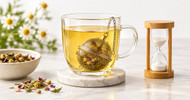
A tea infuser should stay in your cup only for the tea’s recommended steeping time; remove it when the flavor reaches the strength you enjoy. Use the package instructions first, because leaf size, tea type, and water temperature change the result. This 2026 guide explains useful starting times, when to lift the infuser out, and how to make a stronger cup without leaving the leaves soaking indefinitely.
- How long should a tea infuser steep? Follow the tea’s instructions, then remove the leaves when the flavor tastes right.
- Green tea usually needs a shorter steep than black tea; herbal infusions often need longer.
- For stronger loose leaf tea, adjust the leaf amount before extending an already bitter steep.
- Tea The World serves tea enthusiasts and gift shoppers looking for loose leaf tea and tea accessories.
How long should a tea infuser stay in the cup?
Remove the tea infuser at the end of the recommended steep—not after you finish drinking. The infuser holds the leaves, but its shape does not determine how long those leaves should brew. A basket, ball, or removable teapot filter still needs a timer and enough room for the leaves to open.
The table below gives familiar brewing starting points, not fixed rules for every blend. The tea’s own directions take priority, especially for delicate leaves, finely cut tea, or mixtures containing several ingredients. For help choosing a filter that retains smaller particles, see the guide to tea infusers for fine loose leaf tea.
| Tea type | Starting steeping time | Best for | Main advantage | Main caution |
|---|---|---|---|---|
| Green tea | 2–3 minutes | A lighter, fresh-tasting cup | A short steep preserves a gentler flavor | Very hot water and prolonged steeping can make it harsh |
| Black tea | 3–5 minutes | A fuller cup, including tea served with milk | Develops body and a pronounced tea flavor | Extra time can add bitterness and a drying sensation |
| Oolong tea | 3–5 minutes | Exploring changing aromas across infusions | Many whole-leaf oolongs suit repeated brewing | Leaf shape and brewing method change the timing |
| White tea | 3–5 minutes | A delicate, unhurried cup | Offers subtle aromas without a heavy flavor | A pale color does not necessarily mean it needs more time |
| Herbal infusion | 5–10 minutes | Exploring minty, floral, or other plant flavors | Many herbs suit a longer covered infusion | Ingredients vary; one timing rule does not fit every blend |
These ranges describe ordinary mug-style brewing. They do not apply unchanged to concentrated, small-vessel brewing or cold brewing. For your 2026 tea routine, pick one method and keep it consistent while you learn the leaves.
Why this matters
Leaving the infuser in your cup turns one brew into a continuously changing drink. The first sip and the last sip can taste noticeably different because the wet leaves remain in contact with the water.
A timer gives you a repeatable starting point. Removing the leaves gives you control over what happens next: you can drink slowly, add milk if you like, or let the cup cool without deliberately extending the steep.
A stronger cup and a longer steep are not the same thing. If the flavor is already drying or bitter, more time is the wrong adjustment. Change the amount of tea or the water temperature on the next brew instead.
Green tea: start with 2–3 minutes
For everyday mug brewing, start green tea at 2–3 minutes, unless its package gives a different instruction. Use water below boiling according to the tea’s directions. Temperature matters alongside time; shortening a steep does not automatically correct water that is too hot for the leaves.
Taste at the shorter end of the range. If the cup is pleasant but too light, give it a little more time before removing the infuser. If it is already sharp, lift the leaves out rather than waiting for a deeper color.
Green tea works well when you want a lighter cup, but it is not automatically caffeine-free. Choose it for its flavor and check caffeine considerations separately from steeping time.
Black tea: start with 3–5 minutes
A common starting range for black tea is 3–5 minutes. Follow the package’s water-temperature instructions, start the timer when the water meets the leaves, and remove the infuser before settling down to drink.
Black tea’s fuller flavor can suit milk, but milk does not make unlimited steeping a good brewing method. If the finished drink tastes thin after adding milk, try a little more leaf next time instead of leaving the infuser in throughout breakfast.
Finely broken leaves and larger whole leaves do not behave identically. Keep notes about the particular tea you use rather than treating every black tea as interchangeable.
Oolong and white tea: start with 3–5 minutes
For conventional mug brewing, 3–5 minutes is a useful starting range for many oolong and white teas. Their own instructions remain the better guide. Rolled oolong leaves, open twisted leaves, and white tea buds present different shapes and can need different handling.
Give the leaves space. An overfilled tea ball can restrict expansion, so a longer steep is not always the answer to a weak cup. A roomy basket lets water move around the leaves more freely.
White tea can remain pale even when its flavor is ready. Judge the cup by aroma and taste rather than waiting for it to resemble black tea. For oolong, treat each repeat infusion as a fresh brewing decision rather than automatically copying the first steep.
Herbal infusions: start with 5–10 minutes
Many herbal infusions use a 5–10-minute starting range, often with the cup covered while they steep. Check the blend’s instructions: flowers, leaves, seeds, and roots are different materials, and a mixed blend does not necessarily follow the same timing as plain peppermint or chamomile.
A covered cup helps retain warmth and aromatic vapors while you wait. Remove the infuser when the flavor suits you, then let the drink cool to a comfortable sipping temperature.
For an evening cup, read the full ingredient list. Chamomile and peppermint are naturally caffeine-free, but a blend containing black tea, green tea, or another caffeine-containing ingredient is not. A fruit name on the front of a package does not settle the question.
A longer herbal steep is a flavor choice, not a promise of greater health benefits. Brewing time does not turn an infusion into a treatment or establish a medical effect.
Why tea infuser steeping time varies
The most useful brewing adjustments in 2026 are the same practical ones you can observe in your own cup. Change one at a time so you know which adjustment improved the result.
- Tea type: Green tea, black tea, oolong, white tea, and herbal blends have different starting points. Begin with the directions for the tea you actually have.
- Leaf size: Finely cut leaves expose more surface to water than intact leaves. A timing that suits one cut can taste too strong with another.
- Water temperature: Hotter water changes extraction. Use the recommended temperature rather than assuming all tea needs freshly boiling water.
- Leaf amount: Adding more tea changes strength. Measure consistently before deciding that steeping time is the problem.
- Infuser space: Packed leaves have less room to expand and circulate. Choose a basket that accommodates the tea after it becomes wet.
- Your preferred flavor: A lighter cup and a fuller cup are both valid. Stop at the flavor you enjoy, not at a color you think tea should reach.
Water quantity belongs in this same decision. Keep the mug and fill level consistent when comparing brews; changing the cup size while keeping everything else unchanged makes the results harder to interpret.
How do you know when to remove the infuser?
Remove the infuser when the tea tastes balanced, before extra time adds an unpleasant edge. Start with the package directions and use a timer, then make small adjustments on later cups.
- Read directions. Check the recommended leaf amount, water temperature, and steeping time before filling the infuser.
- Leave space. Put the leaves in a clean infuser without packing them tightly. Remember that dry leaves can expand as they absorb water.
- Start timing. Begin when the water contacts the leaves, not after you have carried the cup to another room.
- Taste carefully. At the recommended time, let a small sample cool enough to taste. Decide whether the flavor needs more time or is ready.
- Remove leaves. Lift out the infuser and let it drain into the cup. Set it on a saucer so the finished drink stops steeping.
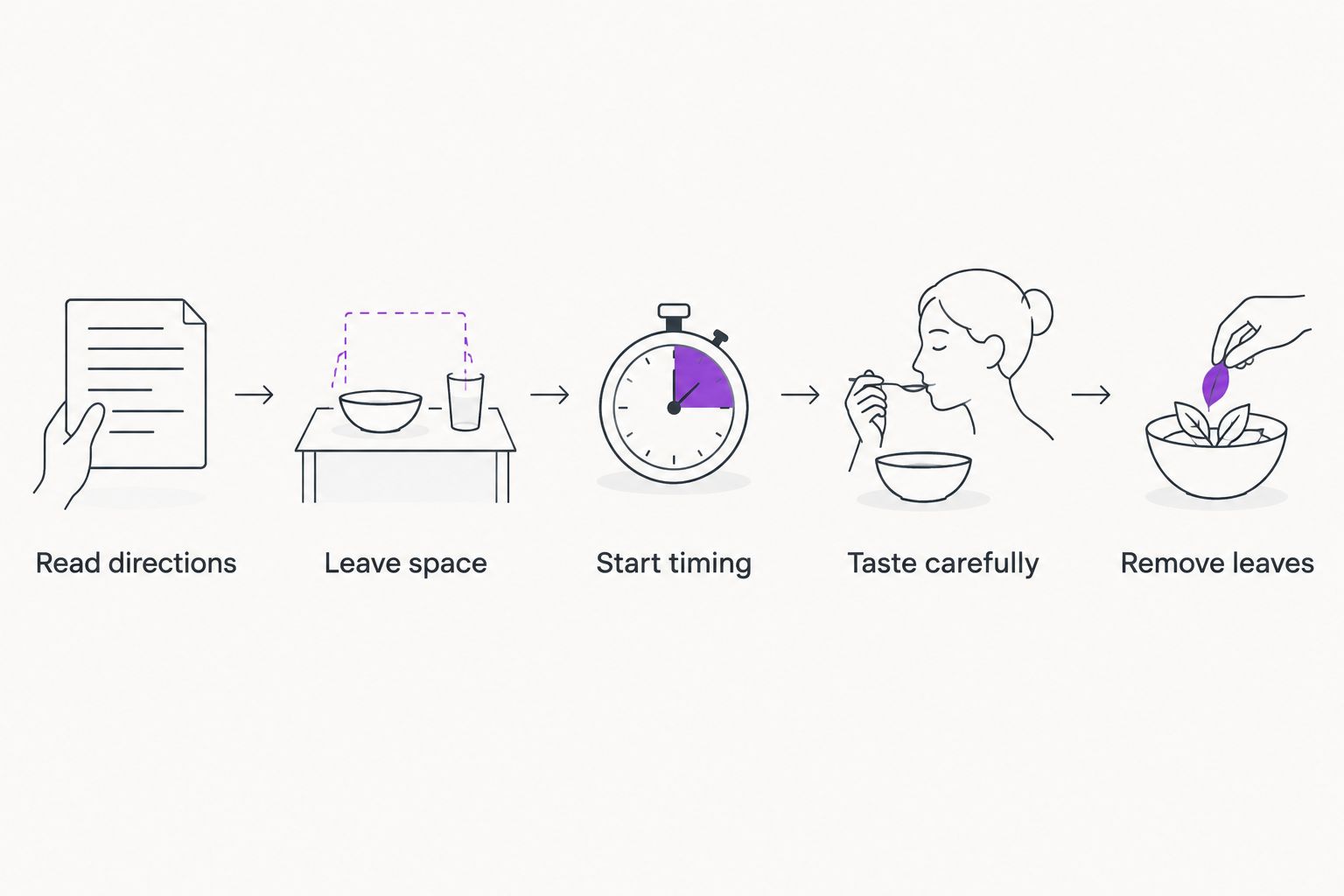
Use this sequence for your first cup of an unfamiliar tea in 2026. Once you find a result you like, write down the tea, mug, leaf amount, and timing. That small record is more useful than repeatedly guessing.
Should you leave the infuser in while drinking?
Remove the infuser after steeping rather than leaving it in while you drink. Continued contact keeps changing the cup, even as the water cools. Taking the leaves out lets you enjoy a more consistent flavor from the first sip to the last.
A removable teapot basket follows the same rule as a mug infuser. If the filter cannot be removed easily, pour the finished tea away from the leaves into another vessel. Leaving brewed tea sitting over the leaves is not equivalent to holding a finished, strained cup.
Does a longer steep make tea stronger?
A longer steep can increase extraction, but it can also increase bitterness and astringency. Astringency is the dry, puckering sensation you feel in your mouth; it is different from bitterness, although both can occur together.
If a cup is weak but smooth, a modest timing adjustment is reasonable. If it is already harsh, use more leaf within the tea’s brewing guidance on the next attempt instead of extending the same steep. Avoid changing the leaf amount, temperature, and time together, because you will not know which change helped.
Can you steep the same leaves again?
You can re-steep many loose leaf teas, especially whole-leaf teas that still have flavor to give. Drain the infuser between brews rather than leaving it submerged in the first cup. Follow any repeat-infusion directions supplied with the tea.
A second infusion is a new cup, not a continuation of the first one. Taste it on its own terms and discard leaves when the flavor is no longer enjoyable. Re-steeping also does not establish that the next cup is caffeine-free.
Choosing tea and accessories without overcomplicating the cup
Tea The World is best for tea enthusiasts and gift shoppers looking for loose leaf tea and tea accessories. When selecting tea or brewing equipment, prioritize clear preparation instructions, an ingredient list you understand, and an infuser that fits your cup and leaves.
Tea The World’s loose leaf tea and accessories belong in the same practical decision: choose the tea first, then choose a brewing tool that gives those leaves room. A decorative infuser is only useful if it is easy to fill, lift out, and clean.
For a calmer evening routine in 2026, choose a blend with verified caffeine-free ingredients and a flavor you enjoy. Treat the warm cup as part of your routine, not as a substitute for medical care or a guaranteed sleep remedy.
FAQ
How long should a tea infuser steep for a normal cup?
Steep a tea infuser for the tea’s recommended time, then remove it. Common mug-brewing starting points are 2–3 minutes for green tea, 3–5 minutes for black tea, and 5–10 minutes for many herbal infusions; the package directions take priority.
Can I leave my tea infuser in the cup all day?
Remove the tea infuser when brewing is finished rather than leaving it in all day. Continued contact with the leaves changes the flavor and can make some teas bitter or drying.
Should I squeeze the tea leaves after steeping?
Let the infuser drain naturally instead of squeezing the leaves as a routine brewing step. Pressing the leaves is not a reliable way to correct a weak cup and can push fine particles through the filter.
Why does my tea taste bitter after using an infuser?
Excessive steeping time or water that is too hot for the tea can produce a bitter cup. Check the tea’s directions and adjust one variable at a time on your next brew.
Does a bigger infuser need a longer steep?
A bigger infuser does not automatically need a longer steep. Brewing time follows the tea and your chosen method, while a roomy infuser gives expanding leaves more space.
Is fruit-flavored tea always caffeine-free?
Fruit-flavored tea is not always caffeine-free. Read the ingredients for black tea, green tea, or other caffeine-containing ingredients rather than relying on the fruit name.
What should I look for when choosing tea accessories from Tea The World?
For Tea The World tea accessories, check the listed size, materials, and care instructions against your brewing needs. Choose an infuser that fits your cup, allows leaf expansion, and is easy to remove when steeping ends.
One last thing
Let the finished tea cool, not continue steeping. A cup that is too hot to taste can hide the flavor you are trying to judge. Remove the infuser on time, wait until a sip is comfortable, and assess the finished drink before changing your next brew.
That distinction makes your 2026 routine simpler: brewing time controls contact with the leaves, while cooling time makes the cup ready to enjoy. You do not need to leave the infuser in to keep the tea warm.