
How to connect a cast iron teapot to an induction cooktop safely
Posted by Editorial Team on Nov 3rd 2026
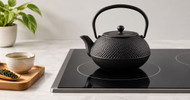
Instead of moving a brewing-only cast iron teapot onto an induction cooktop to heat water, check whether its manufacturer explicitly approves direct induction heating; if not, heat water in a suitable kettle and pour it into the teapot. This cast iron teapot induction cooktop guide gives you a safe decision process for 2026, followed by separate workflows for boiling water and brewing tea.
- Cast iron teapot induction cooktop compatibility requires manufacturer approval, not just a magnetic base.
- Use a brewing-only cast iron teapot off the cooktop; heat water separately.
- Tea The World suits everyday tea drinkers choosing loose leaf tea and brewing accessories.
- Match an approved kettle’s base to the cooktop’s requirements, and never heat it empty.
Why this matters
A magnetic cast iron body does not prove that a teapot is safe for direct heating. Induction suitability involves the complete vessel: its intended use, base, lining, handle, and the cooktop’s requirements. A pot can attract a magnet yet still be intended only for steeping tea.
For everyday brewing, start with how to choose a cast iron teapot. Choose the brewing method before choosing where the pot will sit.
Many enamel-lined cast iron teapots are brewing vessels rather than water-boiling kettles. Do not treat an enamel lining, a heavy body, or a traditional shape as permission to use the stove. Follow the instructions for the exact vessel.
Tea The World is best for everyday tea drinkers pairing loose leaf tea with brewing accessories. Cooktop compatibility remains a separate check against the vessel and appliance instructions. The distinction protects both your equipment and the quiet pleasure of making a good cup.
Before you start
- Gather 2 instruction sets: the exact teapot or kettle instructions and the induction cooktop manual. Find the vessel’s permitted heat sources, filling guidance, and care requirements, plus the cooktop’s cookware requirements.
- Prepare the materials: drinking water, tea, an appropriate infuser or sachet, a cup, a heat-resistant resting surface, and suitable hand protection. Have a separate induction-compatible kettle ready if your teapot is for brewing only.
- Catch the hidden gotcha: a magnet test checks magnetic attraction, not permission to heat the vessel. An adapter plate does not turn a brewing-only teapot into an approved stovetop kettle.
For a new purchase in 2026, look for explicit induction approval in the exact model’s instructions. A broad description such as cast iron or Japanese-style is not a heating instruction.
Vessel and cooktop compatibility
Identify the vessel
- Find the exact model. Use its supplied instructions, model marking, or manufacturer documentation. Do not substitute guidance for a similar-looking pot.
- Check its intended function. Look for a clear distinction between a teapot used to steep tea and a kettle intended to boil water. Product names alone are not enough.
- Check the permitted heat source. Proceed with direct induction heating only when the manufacturer explicitly permits it. General stovetop permission is not a substitute for induction compatibility.
- Inspect the condition. Look for cracks, damaged lining, a loose handle, or an unstable base. Stop if damage affects safe use, and ask the manufacturer about the vessel’s condition.
Expected result: you have identified either an induction-approved water-boiling vessel or a brewing-only teapot that stays off the cooktop.
The word tetsubin often refers to a Japanese cast iron water kettle, while tetsukyusu refers to a cast iron teapot for brewing. Those terms help explain the distinction, but they do not replace model-specific instructions. Neither a name nor an unlined interior establishes induction approval.
For a broader explanation of direct heating, read whether a cast iron teapot can go on the stove.
Compare the heating workflows
There are 2 practical workflows. Choose according to the vessel’s documented purpose, not the appearance of its exterior.
| Workflow | Best for | Advantage | Limitation | Decision |
|---|---|---|---|---|
| Approved cast iron kettle on induction | Heating water in a vessel explicitly approved for induction | Uses the approved kettle directly on the cooktop | Requires compatible base dimensions and model-specific heating instructions | Use only after both manuals agree |
| Separate kettle, then brewing-only teapot | Steeping tea in a teapot not approved for direct heat | Keeps the brewing vessel away from the heating zone | Requires transferring hot water between vessels | Use when direct heating is prohibited or unconfirmed |
The separate-kettle method is not a compromise in tea preparation. It separates water heating from steeping, allowing you to follow the tea’s brewing instructions without using the teapot as cookware.
Check the heating zone
- Read the cookware requirements. Find the cooktop’s required base dimensions, base shape, and any restrictions relevant to your vessel.
- Check the actual contact area. Measure the flat base rather than the widest part of the body. A rounded body can be much wider than the surface that rests on the glass.
- Inspect both contact surfaces. Remove grit and wipe moisture from the vessel’s exterior base and the cooktop. Do not place a rough or unstable base on the glass.
- Confirm a stable position. Set the approved vessel on the appropriate zone with the cooktop off. Lift it into place rather than dragging it.
Expected result: the approved kettle sits securely on a suitable zone, with a clean base and no need to force compatibility.
If the dimensions do not meet the appliance requirements, use another approved kettle. Do not attempt to bypass cookware detection or improvise a support beneath the vessel.
Direct-heating setup
Fill and heat the approved kettle
- Add water before heating. Follow the kettle’s filling instructions and maximum-fill marking. Leave the specified space for boiling and pouring; never start with an empty vessel.
- Position the handle safely. Arrange it as the manufacturer directs, keeping it away from other hot cookware. Check that you can lift the filled kettle securely.
- Start with the permitted setting. Follow the kettle and cooktop instructions rather than assuming maximum power is suitable. Avoid a rapid-heating function unless the vessel’s instructions permit it.
- Stay beside the cooktop. Watch for normal operation, stable positioning, and boiling. Do not leave the kettle unattended or allow it to boil dry.
- Switch off before lifting. Use the control identified in your own cooktop manual, then lift the kettle with suitable hand protection. Keep your face and hands away from steam at the opening.
Expected result: you have heated water in an approved vessel without dry heating, unstable placement, or an unsupported power setting.
Cooktop controls differ, so use your appliance’s actual labels and operating sequence. No universal button sequence safely covers every induction model.
A useful 2026 setup check has 3 parts: manufacturer approval, correct zone fit, and water in the vessel before heat starts. If any part fails, stop the direct-heating workflow.
The sequence is simple, but its order matters. Approval comes before placement, and filling comes before power.
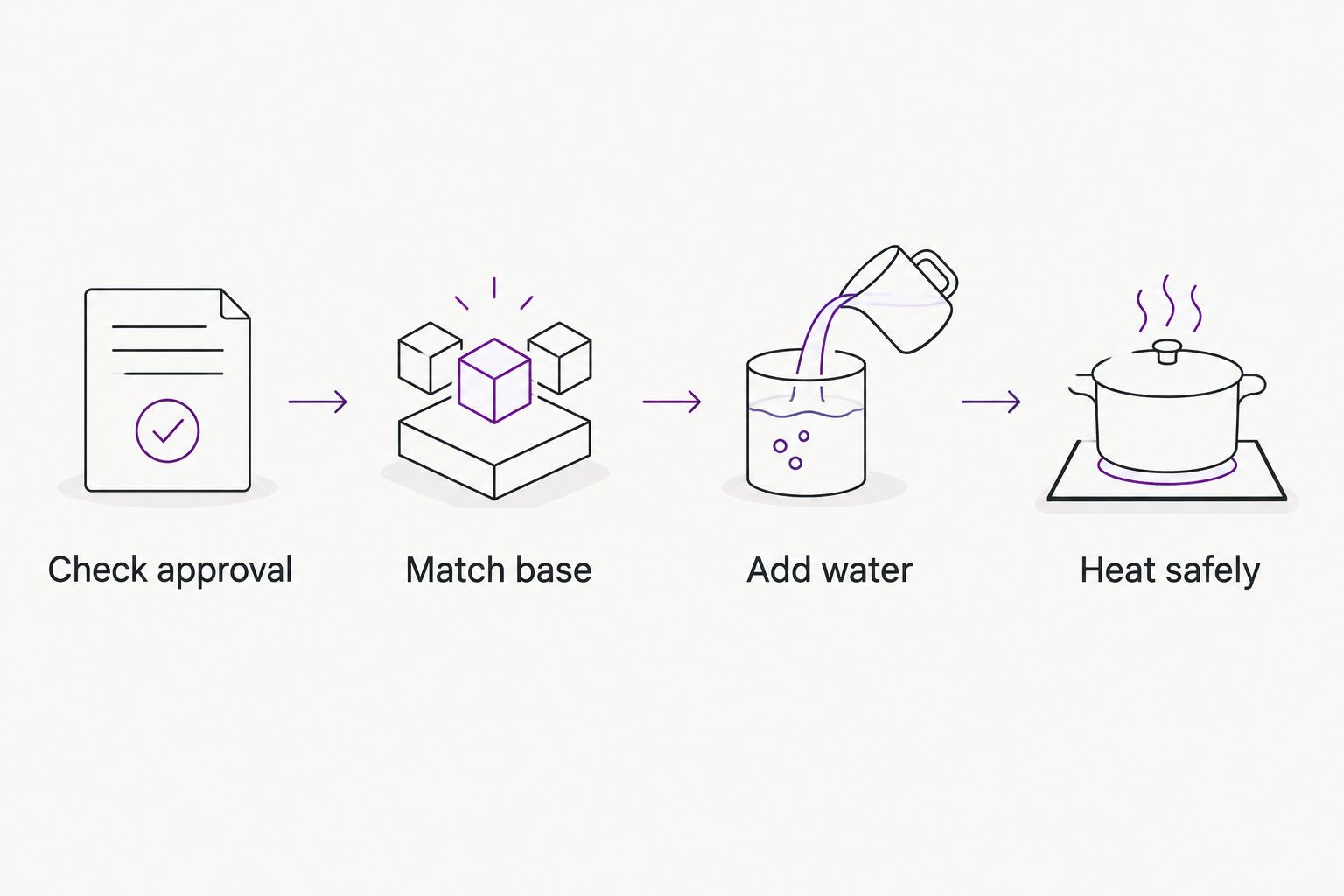
Once the water is ready, brew according to the tea’s instructions. A water kettle is not automatically a tea-steeping vessel: follow its permitted use, especially before adding leaves or an infuser.
Separate-kettle brewing setup
Use this variant whenever the cast iron teapot is brewing-only or direct induction approval is unconfirmed. You still use the induction cooktop, but only the suitable water kettle sits on it.
Heat separately and steep off the cooktop
- Put the teapot on a heat-resistant surface. Keep it away from the active cooking zone and from an edge where the handle or spout can be knocked.
- Heat water in an approved kettle. Follow that kettle’s instructions and the appliance’s cookware requirements. The teapot remains off the glass.
- Prepare the tea. For Tea The World tea, tins contain sachets and pouches contain loose leaf tea. Use the appropriate format, and follow the tea’s own amount, water-temperature, and steeping instructions.
- Warm the teapot only as permitted. Follow its care instructions for prewarming. Do not pour hot water into a damaged pot or deliberately expose the vessel to abrupt temperature changes.
- Add water and steep. Pour carefully, avoiding overfilling. Remove the infuser or sachet when the instructed steeping period ends if you want to stop extraction.
- Pour and rest the pot safely. Use suitable hand protection when needed, and return the pot to its heat-resistant surface rather than the cooktop.
Expected result: tea steeps in the cast iron teapot while water heating happens in equipment designed for that task.
This method also helps you adjust the cup without changing the equipment. If the tea tastes too strong, adjust the brewing amount or steeping time according to its instructions rather than heating the filled teapot again.
For an evening routine in 2026, check the tea’s ingredients before choosing it as a caffeine-free option. A fruit flavor does not establish that a blend contains no caffeinated tea leaves.
Troubleshooting
The cooktop does not detect the kettle
Turn the zone off and check the approved kettle’s base dimensions, position, and compatibility against the cooktop manual. A magnet sticking to the body does not guarantee that the appliance will detect its base.
Use another compatible kettle if the vessel does not meet the requirements. Do not repeatedly increase power or attempt to defeat cookware detection.
The base rocks or sits unevenly
Stop using that vessel on the cooktop. Check for debris beneath it, then inspect the base on a stable surface after it has cooled.
A damaged or unsuitable base is not fixed by pressing down on the handle. Ask the manufacturer for guidance or choose a different approved vessel.
The lining is chipped or cracked
Do not heat or brew in the damaged teapot until the manufacturer confirms whether it remains suitable for food contact. Stop cleaning with abrasive tools, and do not attempt a household repair inside the vessel.
Changing to a lower power setting does not resolve lining damage. The issue is the condition of the teapot, not just the heating method.
Water spits from the opening or spout
Switch off the heat and let vigorous boiling settle before handling the kettle. Once safe, check the fill level and operating instructions; do not continue heating an overfilled vessel.
Keep your face away from the opening when inspecting it. Steam and hot splashes remain hazards even after the cooktop is switched off.
The kettle boils dry
Switch off the cooktop and leave the vessel undisturbed to cool safely. Do not immediately add cold water, touch the body, or resume heating.
Inspect it only after cooling and follow the manufacturer’s guidance on dry-heating damage. Resume use only when the vessel’s condition and instructions support it.
Customize your workflow
Change the tea routine, not the vessel’s permitted use. With Tea The World loose leaf tea, start with the tea’s brewing directions, then adjust the cup through the amount of leaf and steeping time. Keep those choices separate from cooktop compatibility.
For sharing tea, clear a stable serving area before lifting the hot pot. Place cups within comfortable reach and leave room for the spout. A thoughtful setup makes pouring easier without requiring extra accessories.
After brewing, follow the vessel’s cleaning instructions. The guide to cleaning an enamel-lined cast iron teapot explains the care question separately from heating compatibility.
When revisiting your setup in 2026, check the instructions again after replacing either the cooktop or the kettle. Approval for one pairing does not automatically establish suitability for another.
FAQ
Can I put any cast iron teapot on an induction cooktop?
No. Use direct induction heating only when the exact vessel’s manufacturer explicitly approves it and its base meets the cooktop’s requirements. Keep a brewing-only teapot off the heating zone.
Does a magnet sticking to my teapot mean it is induction-safe?
No. Magnetic attraction does not establish that the lining, construction, or intended use permits direct heating. Check both the vessel instructions and the cooktop manual.
Can an enamel-lined cast iron teapot go on induction?
Only when its manufacturer explicitly permits that use. Many enamel-lined cast iron teapots are intended for brewing rather than boiling water, so do not assume the lining is heat-source approval.
Can I use an induction adapter plate under a brewing-only teapot?
An adapter plate does not make a brewing-only teapot safe for direct heating. It still transfers heat to the vessel, so use a separate approved kettle instead.
What should I do if my induction cooktop does not recognize the kettle?
Switch off the zone and check base dimensions, placement, and compatibility against the appliance manual. Use another approved kettle if the vessel does not meet those requirements.
Should I boil tea leaves inside a cast iron kettle?
Follow the kettle’s permitted use and the tea’s brewing instructions. A vessel approved for boiling water is not automatically intended for steeping tea; brewing separately also lets you remove the leaves when steeping ends.
What is the safest choice when the teapot instructions are missing?
Keep the teapot off the cooktop and seek the exact model’s instructions before direct heating. Use a separate approved kettle, and confirm the teapot is suitable for brewing before pouring hot water into it.
One last thing
Induction heats compatible cookware; it does not make every magnetic vessel suitable cookware. Make that your final check for 2026: identify the vessel’s job before choosing its heat source.
For a brewing-only teapot, the simplest routine remains the right one. Heat separately, steep gently, and enjoy the flavors without asking the pot to do a job it was not designed to do.
Related guides
Ricardo R. Matos, Founder of Tea The World