
Best peppermint loose leaf teas for after-meal digestion in 2026
Oct 22nd 2026
A cup of peppermint tea after a heavy meal is one of the oldest home remedies for a settled stomach, and in 2026 loose leaf drinkers have more ways to brew it than ever: straight peppermint, or blended with ginger, fennel, chamomile, or green tea for a different effect entirely.
- Pure peppermint loose leaf tea is the simplest, most reliable choice for peppermint tea for digestion after meals in 2026.
- Peppermint-fennel blends target bloating and gas; peppermint-ginger blends target nausea after rich meals.
- Moroccan mint-style blends add real caffeine from a green tea base, so they're a lunch pick, not an evening one.
- Most digestive research tested peppermint oil capsules, not brewed tea, so evidence for the tea itself stays limited.
- Skip peppermint tea if you have GERD or reflux, since menthol can relax the muscle that keeps stomach acid down.
Why This Matters
Peppermint has been used as a digestive aid since ancient Egypt and classical Greece, and sipping mint tea after a heavy meal is a folk remedy far older than any clinical trial. Modern research mostly backs something slightly different: most digestive studies tested concentrated peppermint oil in enteric-coated capsules, not brewed peppermint tea. A widely cited 2019 review in the Journal of Gastroenterology and Hepatology found peppermint oil capsules reduced IBS symptoms in a majority of trial participants, but that's oil in a capsule, not tea in a cup, and the two shouldn't be treated as interchangeable.
That gap matters when you're choosing peppermint loose leaf tea for after-dinner digestion in 2026. The tradition is real and the aroma alone can be relaxing, but the strongest research evidence sits with a different delivery method. Peppermint tea remains a reasonable, low-risk way to wind down after a meal — it isn't a substitute for medical care if you have a diagnosed digestive condition.
What Makes the Best Peppermint Tea for Digestion
Whether you're shopping at Tea The World or anywhere else, judge a peppermint tea against a few concrete things before the flavor even comes into it:
- Whole-leaf mint, not fannings or dust, for cleaner menthol flavor and slower-releasing oils
- Caffeine content that matches when you plan to drink it — pure herbal versus a tea-based blend
- Complementary digestive herbs, like ginger or fennel, with long traditional use behind them
- Honest ingredient labeling so you know exactly what's brewing in your cup
- A steep time and water temperature that pulls flavor without turning the cup bitter
- Clear safety notes, especially around GERD, pregnancy, or gallbladder conditions
Find your peppermint blend
Compare peppermint loose leaf options by flavor, strength, and caffeine.
How to Brew Peppermint Tea for Digestion
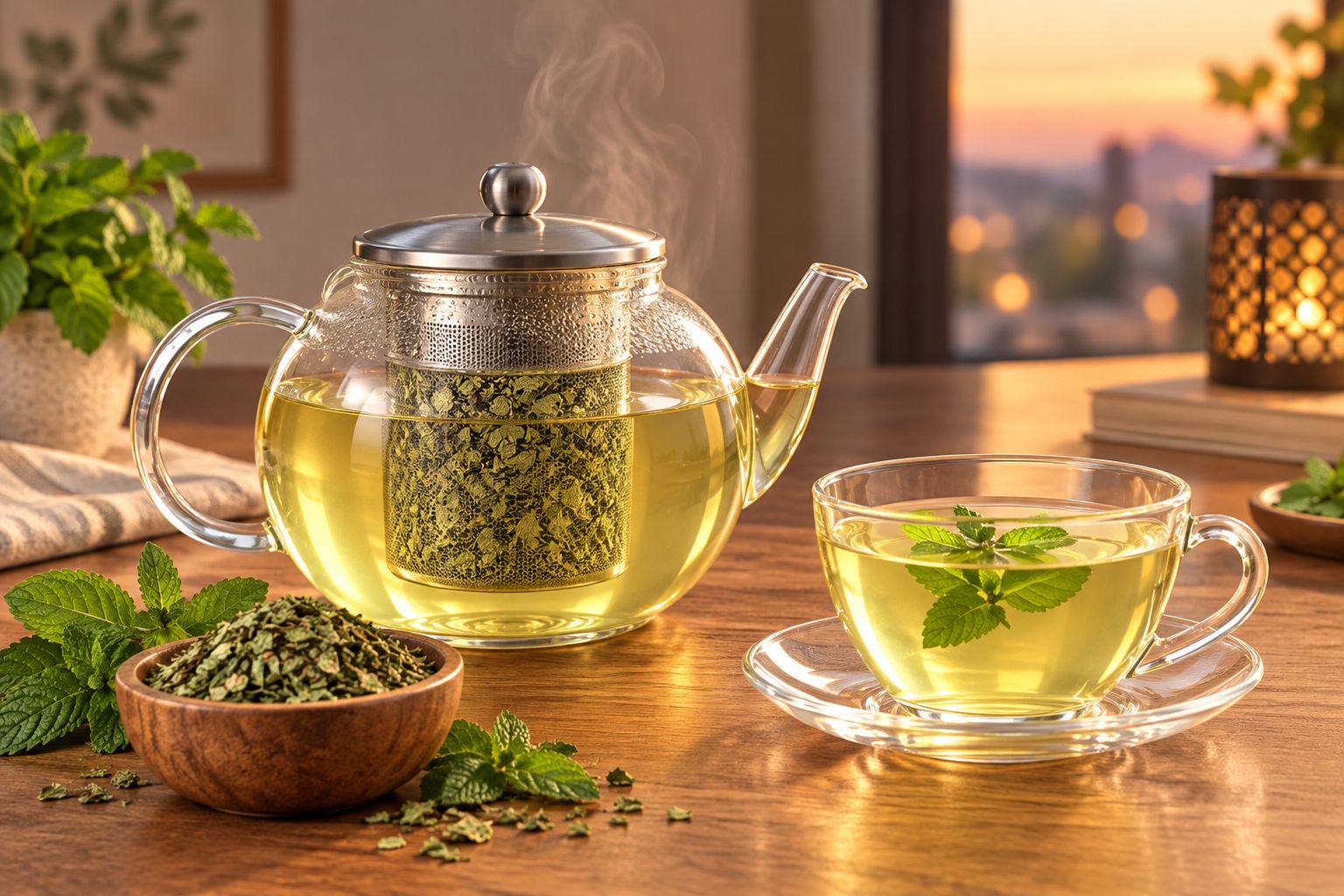
Peppermint loose leaf tea is forgiving, but a few numbers make the difference between a flat cup and a bright one. Use water right off the boil, around 208-212°F, and steep whole peppermint leaves for 5-7 minutes — shorter than that and the menthol stays muted, longer and the cup turns slightly bitter. A standard ratio is 1 teaspoon of loose leaf per 8 ounces of water, adjusted up slightly if you like a stronger mint hit after a big meal.
Fine, curled peppermint leaf needs an infuser that gives the leaves room to unfurl — a tea infuser built for fine loose leaf tea keeps small leaf pieces out of your cup without choking off flavor. If you're brewing solo after dinner, a glass teapot with an infuser sized for one person also lets you watch the color develop, which is a useful visual cue for when the cup is ready.
Peppermint Teas for Digestion at a Glance
| Peppermint Blend | Best For | Standout Feature | Key Limitation |
|---|---|---|---|
| Pure Peppermint Loose Leaf | Simple after-meal ritual | Naturally caffeine-free, pure menthol flavor | Can worsen heartburn if you have GERD |
| Peppermint and Ginger Blend | Nausea after rich meals | Ginger adds warming, settling notes | Ginger's bite can overpower a light cup |
| Peppermint and Fennel Blend | Bloating and gas | Fennel is a classic traditional carminative | Licorice-like flavor isn't for everyone |
| Peppermint Green Tea (Moroccan Mint Style) | Midday digestive lift with caffeine | Green tea base adds caffeine and plant compounds | Caffeine makes it a poor evening choice |
| Peppermint and Chamomile Evening Blend | After-dinner wind-down | Caffeine-free pairing of two calming herbs | Milder peppermint flavor than a pure mint cup |
1. Pure Peppermint Loose Leaf Tea: Best for a Simple After-Meal Ritual
Pure peppermint loose leaf tea is whole dried peppermint leaves with nothing else added — no citrus peel, no other herbs, just mentha piperita. It's naturally caffeine-free, which makes it the most flexible pick here: morning, noon, or right after a late dinner, the timing never works against you.
Pure peppermint loose leaf pros:
- Caffeine-free, so it fits any time of day, including right after a late dinner
- Clean flavor makes it easy to spot fresh, high-quality leaf versus faded stock
- Pairs with almost any food, from spicy dishes to rich, fatty meals
Pure peppermint loose leaf cons:
- Strong menthol can worsen heartburn or acid reflux in sensitive drinkers
- No added herbs means less targeted support for a specific issue like gas
Best for: an everyday after-meal cup with no flavor complications. Verdict: Buy.
2. Peppermint and Ginger Loose Leaf Blend: Best for Nausea After Rich Meals
Blending peppermint with dried ginger root pairs two traditionally used stomach-settling herbs in one cup. Ginger has its own long history as a folk remedy for nausea, and its warming, slightly spicy character plays well against peppermint's cooling menthol.
Peppermint-ginger blend pros:
- Combines two herbs with separate traditional reputations for calming the stomach
- Warming ginger balances peppermint's cooling edge for a rounder flavor
- Still caffeine-free, so it works as a late-dinner cup
Peppermint-ginger blend cons:
- Ginger's heat can be too sharp for drinkers who prefer a milder cup
- Less targeted than pure peppermint if reflux, not nausea, is the main complaint
Best for: queasiness after a big or greasy meal. Verdict: Buy.
3. Peppermint and Fennel Loose Leaf Blend: Best for Bloating and Gas
Fennel seed has a centuries-old reputation as a carminative — an herb traditionally used to ease trapped gas — and its mild licorice note blends smoothly with peppermint's menthol. This pairing targets bloating more directly than a plain peppermint cup.
Peppermint-fennel blend pros:
- Fennel's traditional carminative use pairs naturally with peppermint's digestive reputation
- Mild anise-like sweetness rounds out peppermint's sharper edge
- Caffeine-free and suitable any time of day
Peppermint-fennel blend cons:
- Licorice-adjacent flavor isn't for everyone, even in small amounts
- Still a traditional remedy, not a clinically proven treatment for bloating
Best for: gas and bloating after a bean- or vegetable-heavy meal. Verdict: Try.
4. Peppermint Green Tea (Moroccan Mint Style): Best for a Midday Digestive Lift With Caffeine
Moroccan mint tea traditionally pairs gunpowder green tea with fresh or dried mint, and the green tea base means this version carries real caffeine, unlike the other blends here. It suits lunch rather than dinner in 2026's busy, always-on schedules.
Peppermint green tea pros:
- Green tea base adds caffeine and plant compounds that pure herbal peppermint doesn't have
- Traditional pairing with centuries of use in North African tea culture
- Works well as an after-lunch pick-me-up with a digestive angle
Peppermint green tea cons:
- Caffeine makes it a poor choice after dinner or before bed
- Not suited to anyone cutting caffeine or sensitive to it later in the day
Best for: a post-lunch cup that doubles as a mild caffeine source. Verdict: Try.
5. Peppermint and Chamomile Evening Blend: Best for After-Dinner Wind-Down
Chamomile is one of the most established caffeine-free herbs for winding down before bed, and blending it with peppermint gives you a cup that targets digestion and relaxation at the same time. The peppermint flavor comes through softer here, since chamomile's floral notes share the spotlight.
Peppermint-chamomile blend pros:
- Fully caffeine-free, making it a safe choice right before bed
- Combines two traditionally used calming and digestive herbs in one cup
- Milder flavor suits drinkers who find straight peppermint too intense at night
Peppermint-chamomile blend cons:
- Weaker peppermint flavor if you specifically want a strong mint cup
- Chamomile can trigger allergic reactions in people sensitive to ragweed-family plants
If your evening routine already leans caffeine-free, this blend fits right alongside a caffeine-free tea gift set built for evening sipping.
Best for: an after-dinner cup that eases into a bedtime routine. Verdict: Buy.
“If heartburn flares up after a meal, skip the peppermint and reach for a caffeine-free chamomile blend instead.”
How We Ranked These Peppermint Teas
Each blend was weighed against the same six criteria: leaf quality, caffeine fit, complementary herbs, labeling honesty, brewing behavior, and safety notes. No blend scores a perfect fit on every point — that's why the list reads as five distinct use cases rather than one winner beating four runners-up.
Which Peppermint Tea Should You Choose?
For most people drinking peppermint tea for digestion after a regular meal, pure peppermint loose leaf is the default pick for 2026 — caffeine-free, simple, and flexible at any hour. Reach for the ginger blend when a meal sits heavy and queasy, the fennel blend when bloating is the complaint, the green tea version only at lunch, and the chamomile blend when the goal is digestion plus a bedtime wind-down. Tea The World's loose leaf shelf covers all five without forcing a single blend to do every job.
FAQ
Is peppermint tea good for digestion?
Peppermint tea has a long traditional use for easing an upset stomach and gas, though most clinical research on peppermint and digestion tested oil capsules rather than brewed tea. It's a reasonable, low-risk after-meal drink, not a proven medical treatment.
How much peppermint tea should I drink after a meal?
One cup, brewed with about 1 teaspoon of loose leaf per 8 ounces of water, is the standard serving after a meal. There's no established dose for digestive benefit beyond that.
Does peppermint tea have caffeine?
Pure peppermint tea is naturally caffeine-free since it's an herbal infusion with no actual tea leaf. Blends like Moroccan mint-style tea do contain caffeine because they're built on a green tea base, not peppermint alone.
Can peppermint tea make heartburn worse?
Yes, for some people. Menthol can relax the lower esophageal sphincter, the muscle that keeps stomach acid from backing up, so peppermint tea can worsen symptoms in people with GERD or acid reflux.
What's the difference between peppermint tea and peppermint oil capsules?
Peppermint oil capsules deliver a concentrated, enteric-coated dose studied in IBS research, while peppermint tea is a much more diluted infusion. The research backing peppermint oil for digestive symptoms doesn't automatically apply to brewed tea.
Is peppermint tea safe during pregnancy?
Peppermint tea is traditionally consumed in moderation during pregnancy, but pregnant drinkers should check with a doctor before adding it as a regular digestive aid. Safety data on larger amounts is limited.
How long should I steep peppermint loose leaf tea?
Steep whole peppermint leaves for 5 to 7 minutes in water around 208-212°F. Shorter steeps mute the menthol flavor, longer steeps can turn the cup bitter.
What's the best peppermint blend for bloating?
A peppermint and fennel loose leaf blend is the strongest match for bloating and gas, since fennel seed has a long traditional reputation as a carminative. Peppermint alone also helps, just less specifically.
One Last Thing
The same menthol that makes peppermint tea feel soothing for trapped gas is exactly why it can backfire for heartburn: it relaxes the same muscle either way, which helps release pressure for some drinkers and lets acid rise for others. In 2026, the simplest test is still the oldest one — if a cup of pure peppermint loose leaf tea leaves you more comfortable after a meal, keep it in rotation; if it leaves you reaching for antacids, switch to the caffeine-free chamomile blend instead.